Yard Drainage Problems in Topeka, KS: What Actually Fixes Standing Water?
7071302842 • September 14, 2026

September 14, 2026

Standing Water in Your Yard? Start With Where the Water Is Coming From.

Standing water, soggy grass or downspouts dumping near your home? Learn how grading, drainage lines, French drains and downspout extensions solve different Topeka yard drainage problems.

Standing Water in Your Yard? Start With Where the Water Is Coming From.

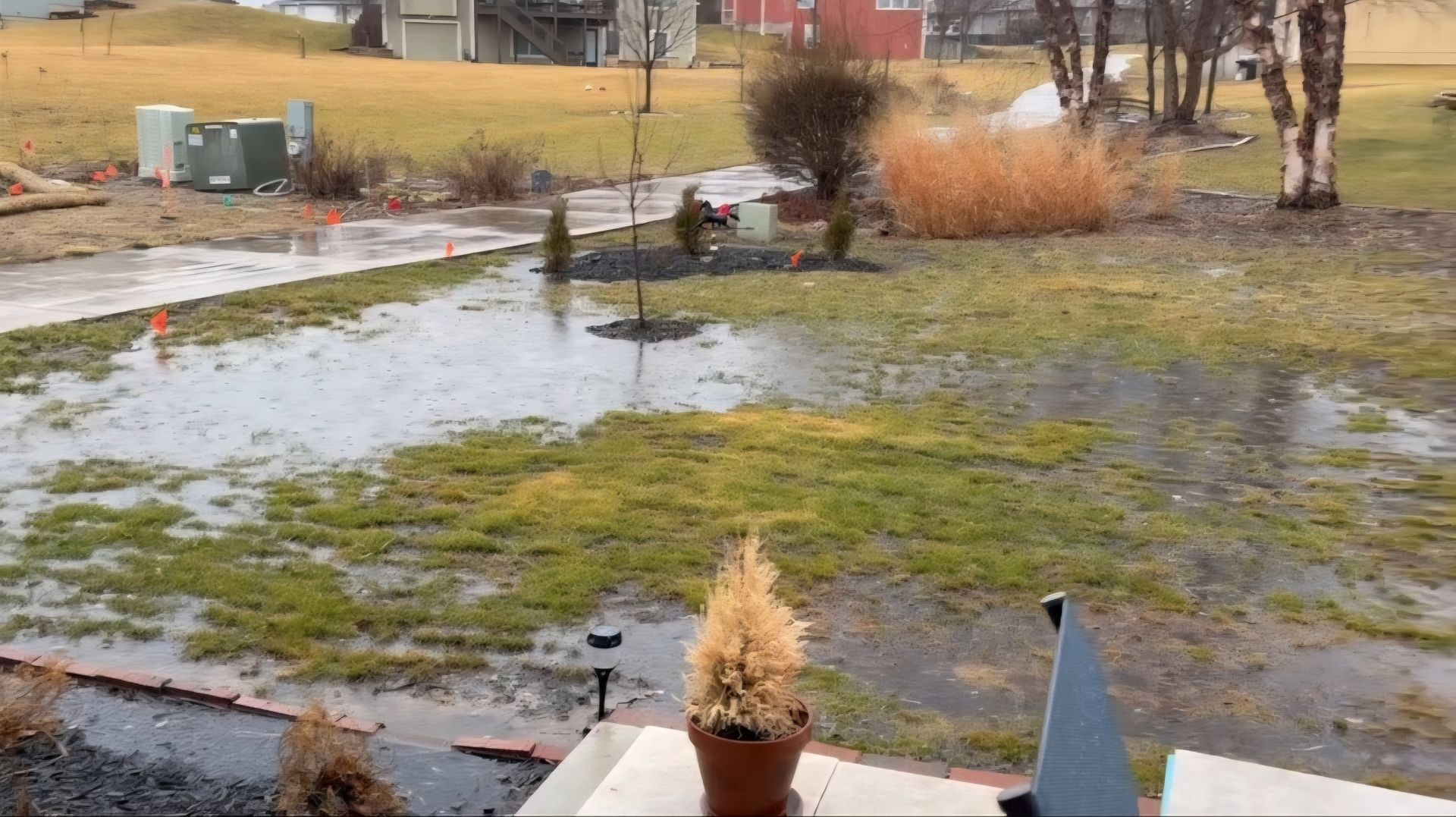
After a heavy Kansas rain, some homeowners walk outside and discover the same problem they've seen dozens of times:

Water standing in the lawn.

A soggy area that takes days to dry.

Mulch washed out of a landscape bed.

Water collecting beside the house.

Or a downspout emptying thousands of gallons of roof runoff into exactly the wrong place.

The obvious question is:

How do we get rid of the water?

But that's usually not the first question we ask.

The first question is:

Where is the water coming from—and where can it reasonably go?

That's the foundation of a good drainage plan.


Why Does Water Keep Standing in the Same Part of My Yard?


Water follows elevation.

If one area of a property is lower than the surrounding ground, runoff naturally moves toward it.

Problems can become more noticeable when:

  • Soil settles over time
  • Landscaping changes the original grade
  • A neighboring area drains toward the property
  • Downspouts concentrate roof water into one location
  • Hard surfaces send additional runoff toward the lawn
  • Soil drains slowly
  • The property simply doesn't have an adequate outlet for surface water

Shawnee County specifically notes that localized ponding in residential yards can sometimes be corrected through grading.

IAN'S ADVICE:

Don't start by asking, “Where should we put the drain?” Start by asking, “Where is the water coming from, and where can we safely send it?”

That one change in thinking can prevent a lot of unnecessary drainage work.


Does Every Wet Yard Need a French Drain?


No.

French drains can be extremely useful, but they're one drainage tool—not the answer to every drainage problem.

A drainage system should be selected based on what the water is actually doing.

For example:

If water is flowing across the surface:

Changing grade or creating a swale may be appropriate.

If a downspout is creating the problem:

Extending or burying the downspout discharge may solve it.

If subsurface water is saturating an area:

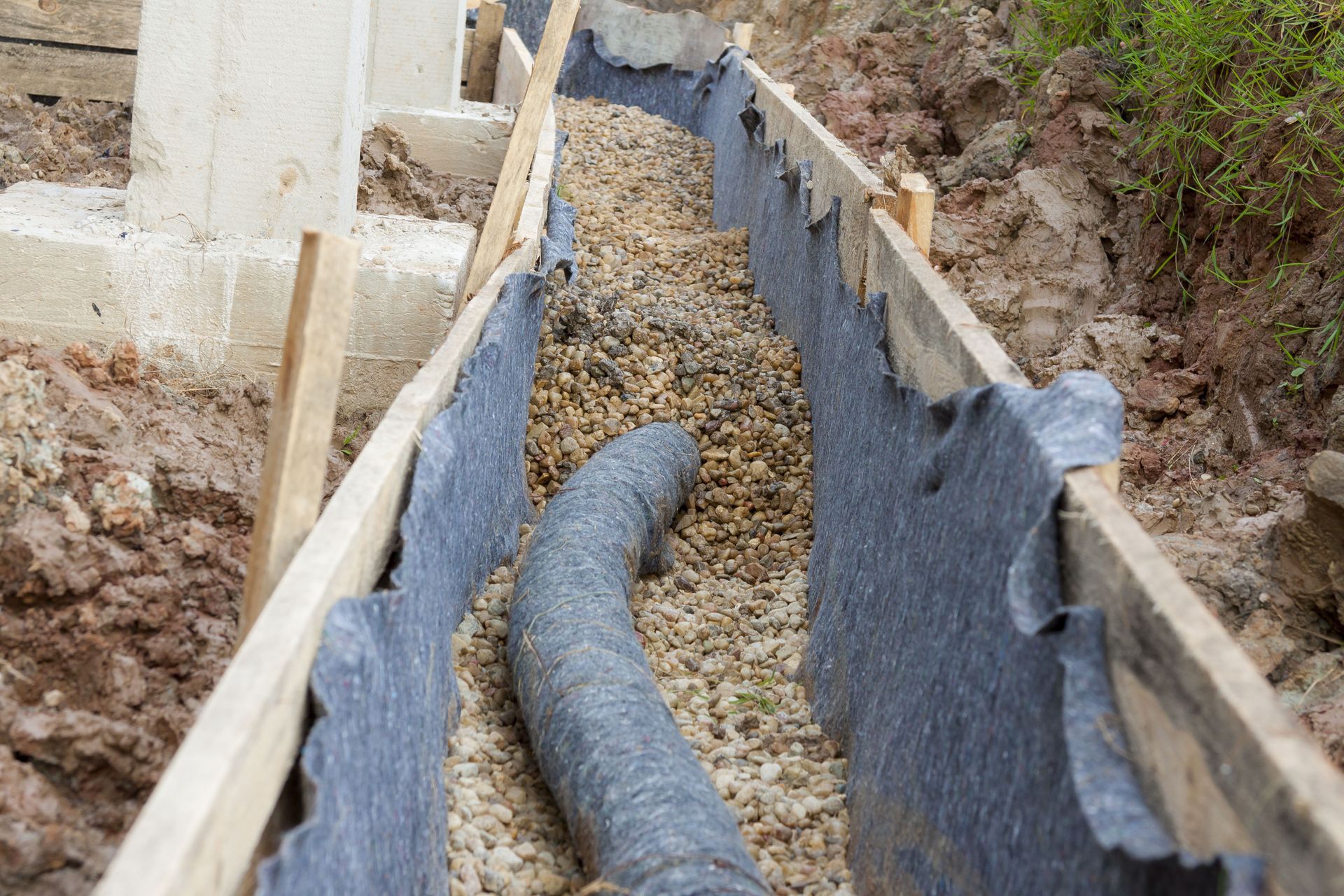
A properly designed subsurface drainage system may be appropriate.

If a low spot simply has nowhere to drain:

The solution may involve changing elevation, installing surface drainage or creating a discharge route.


The right drainage solution should follow the water problem—not the other way around.


When Can Regrading Fix a Drainage Problem?


Sometimes the simplest drainage system doesn't involve pipe at all.

If the existing ground directs water toward the wrong area, changing the grade may allow gravity to do the work.

Regrading can be useful for:

  • Low areas that collect surface runoff
  • Soil that has settled beside a structure
  • Landscapes that pitch toward the house
  • Areas where previous construction disrupted the original grade
  • Locations where water needs to be redirected toward a suitable outlet

But grading has limits.

You can't simply move water onto someone else's property or block its natural drainage path.

The finished design has to account for where that water ultimately goes.

CONTRACTOR SECRET

Gravity is one of the best drainage systems available—and it doesn't have a pump, pipe or moving part.

The trick is giving the water somewhere appropriate to go.


When Does a Downspout Become a Yard Drainage Problem?


Think about how much roof surface feeds a gutter system.

Every rainfall collects water from hundreds or even thousands of square feet of roof and concentrates it into a handful of downspouts.

If one of those downspouts empties directly beside the house or into a low landscape bed, it can repeatedly saturate the same area.

Depending on the property, options may include:

  • Above-ground extensions
  • Buried drainage lines
  • Solid pipe carrying water away from the house
  • Pop-up emitters
  • Daylight discharge where appropriate

At Yardcrafters, we generally prefer rigid pipe where conditions allow because it provides a more durable, consistent drainage path than relying solely on flexible corrugated pipe.


French Drain vs. Surface Drain vs. Downspout Drainage

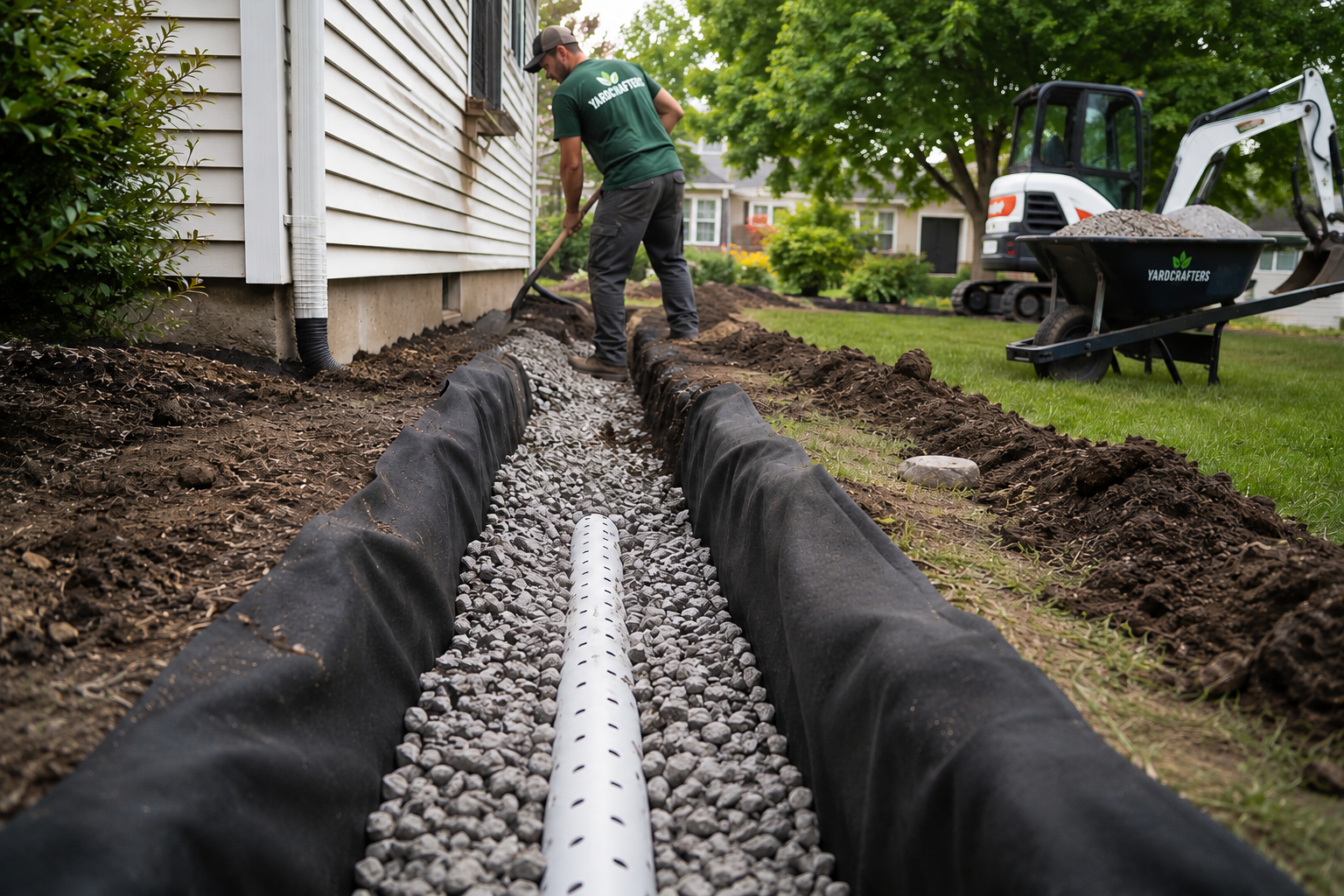
FRENCH DRAIN

Best suited for:
Certain subsurface drainage and saturated-soil conditions.

How it works:
Water enters a gravel/drainage system and is carried toward an outlet.

SURFACE DRAIN / GRADING

Best suited for:
Water moving or collecting on top of the ground.

How it works:
Grade and/or drains intercept and redirect surface runoff.

DOWNSPOUT DRAINAGE

Best suited for:
Concentrated roof runoff.

How it works:
Carries gutter discharge away from the structure to an appropriate location.


What Are the Warning Signs of a Yard Drainage Problem?

Walk around the property during—or shortly after—a heavy rain.

Look for:

Standing water that remains after surrounding areas drain

Soggy turf that stays wet for days

Water collecting beside the foundation

Mulch, soil or gravel repeatedly washing out

Visible erosion channels

Grass that struggles in the same wet area

Downspouts emptying into low spots

Water flowing toward patios, retaining walls or structures

Settled areas around previous construction


A dry afternoon can hide almost all of these symptoms.

That's why one of the best times to evaluate drainage is during or immediately after a meaningful rainfall.


Why We Don't Automatically Install a Drain


When Yardcrafters looks at a drainage problem, we're not starting with a predetermined product.

We look at:

Where the water starts.

Where it travels.

Where it collects.

Existing property elevations.

Downspouts and hard surfaces.

Potential outlets.

Existing landscaping and structures.

And what happens to the surrounding property if that water is redirected.

From there, we can determine whether the appropriate solution involves grading, drainage pipe, downspout work, surface drainage—or a combination.

IAN'S ADVICE box

If somebody recommends a French drain before figuring out where the water is supposed to discharge, I'd ask another question:

“Where is all of that collected water going?”

A drain without an appropriate outlet isn't much of a drainage plan.


Can Drainage Work Be Combined With Lawn or Landscape Restoration?


Absolutely.

Drainage projects often disturb lawn or landscaped areas because the work happens underground.

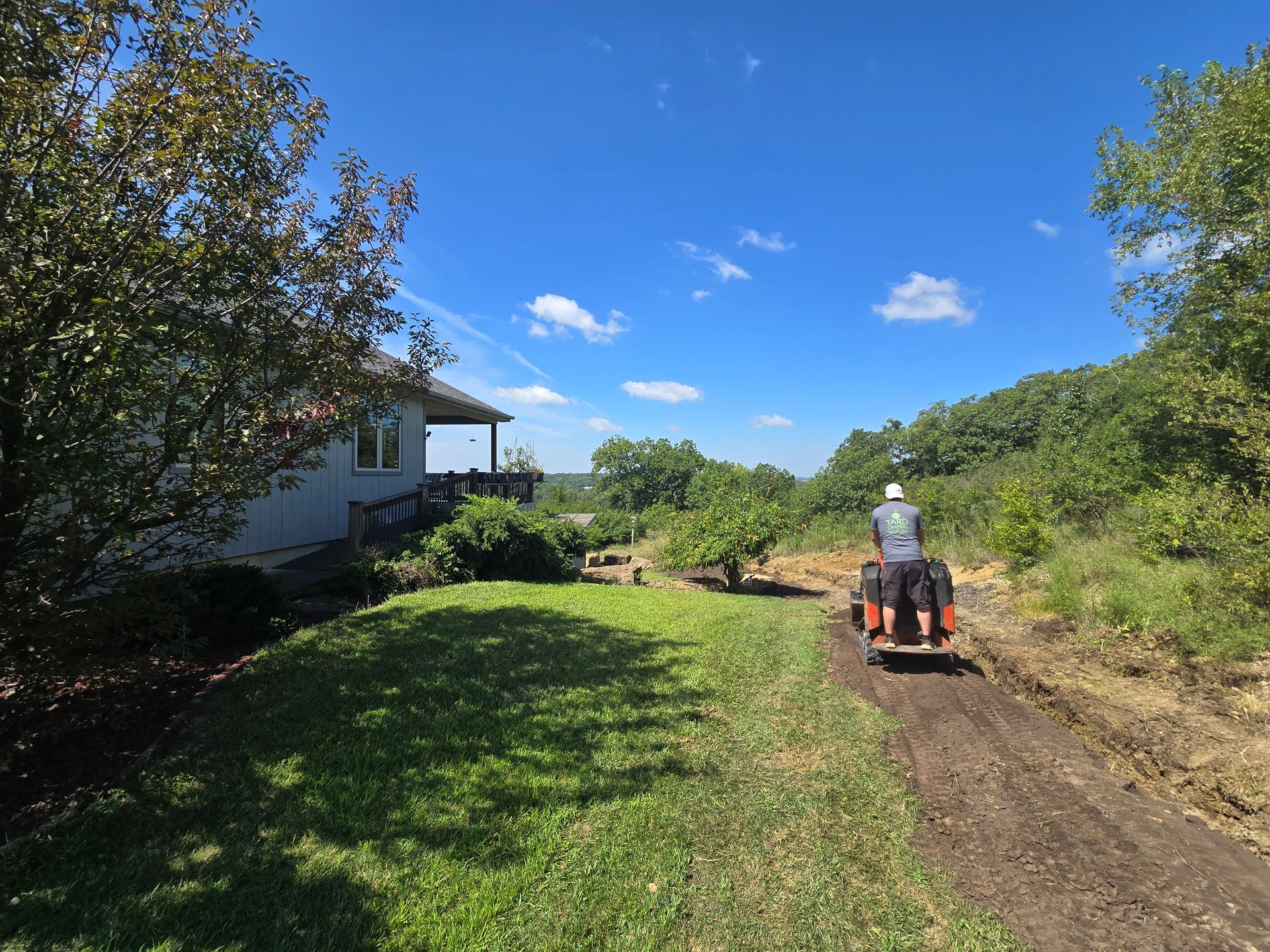
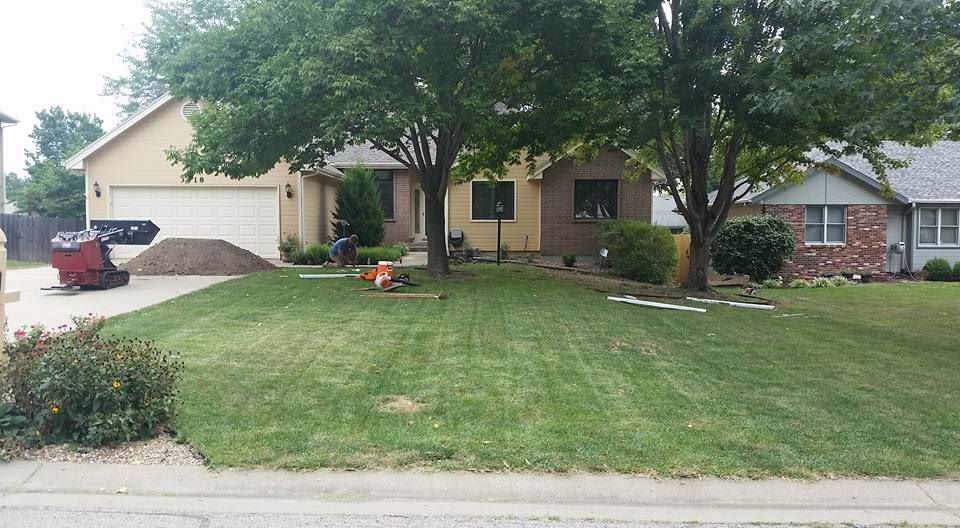
A complete project may include:

  • Excavation
  • Drainage installation
  • Regrading
  • Topsoil
  • Finish grading
  • Premium tall fescue seed
  • Starter fertilizer
  • Straw on bare areas
  • Sod where appropriate
  • Landscape-bed restoration

This is one advantage of having the drainage work handled as part of a broader landscape project rather than treating the pipe and the surrounding property as two unrelated jobs.


Yard Drainage in Topeka & Northeast Kansas

Yardcrafters has served Topeka and Northeast Kansas since 2016.

We handle drainage, grading, downspout extensions, lawn restoration, landscaping, retaining walls and other exterior projects that often interact with how water moves through a property.

If rain keeps showing you the same wet area, erosion problem or drainage issue, we can help determine what's causing it and what a practical solution looks like.

Tired of Watching the Same Part of Your Yard Flood?

White body text:

A drainage estimate starts with understanding the property—not automatically selling you a drain.

If water keeps collecting where it shouldn't, show us what's happening and we'll help determine the next step.

Yardcrafters LLC
📞 (785) 608-2970
🌐
www.yardcraftersks.com
📧
yardcraftersoftopeka@gmail.com
📍 Serving Topeka & Northeast Kansas Since 2016

By 7071302842 August 31, 2026
Why Paver Patios Fail in Kansas | Proper Patio Base Preparation
By Hibu Websites August 27, 2026
Discover how professional landscaping contractors enhance outdoor functionality, improve curb appeal, and boost overall home value with custom design expertise.
By 7071302842 August 18, 2026
Why Does Grass Keep Dying in the Same Spot? 7 Problems Kansas Homeowners Should Check
Show More →