
August 31, 2026
Why Paver Patios Fail in Kansas | Proper Patio Base Preparation

Why do paver patios sink, shift and become uneven? Learn what proper patio base preparation looks like and what Kansas homeowners should know before building a patio.
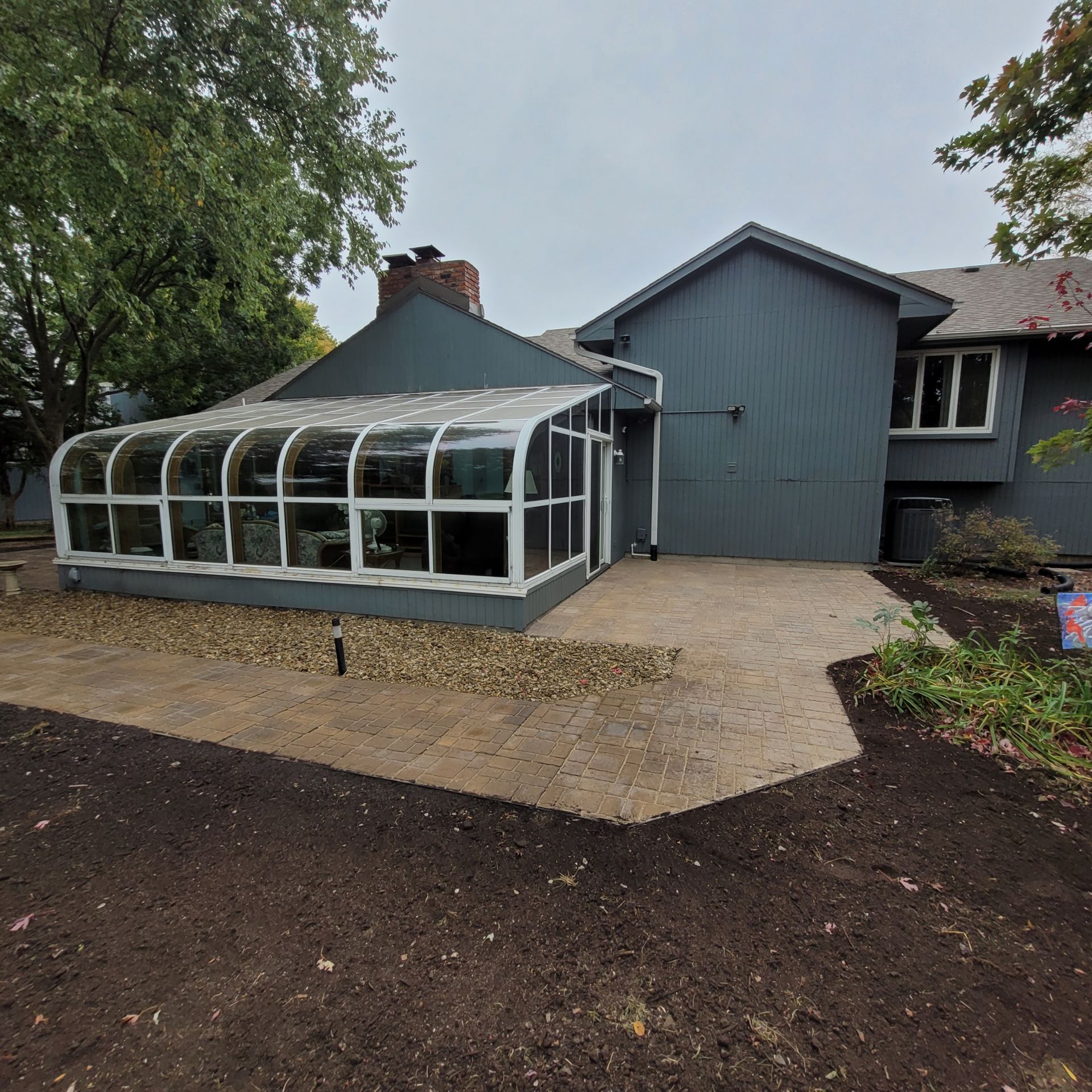
A finished paver patio can look pretty simple.
Pavers. A border. Maybe a fire pit, seating area or walkway.
But most of what determines whether that patio still looks good years from now is completely hidden by the time the project is finished.
It’s underneath it.
At Yardcrafters, that’s one of the things we want homeowners in Topeka and Northeast Kansas to understand before comparing patio projects based only on the finished appearance or price.
Two patios can look nearly identical the day they’re completed and perform very differently several years later.

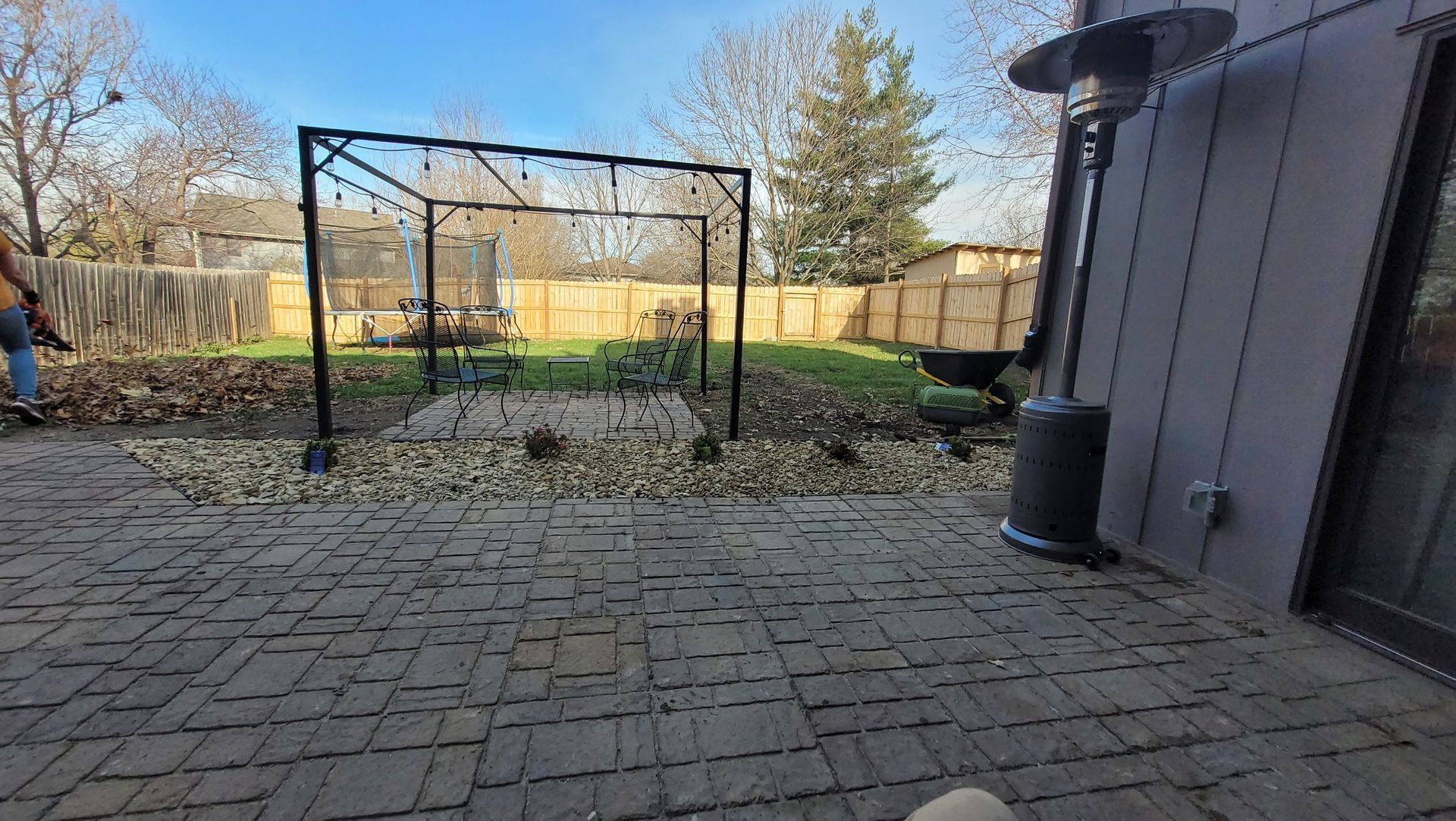
A finished patio may look simple, but much of what determines its longevity is hidden underneath.
Why Do Paver Patios Sink or Become Uneven?
When pavers begin settling, separating or developing low areas, the paver itself usually isn’t the real problem.
The problem is often below it.
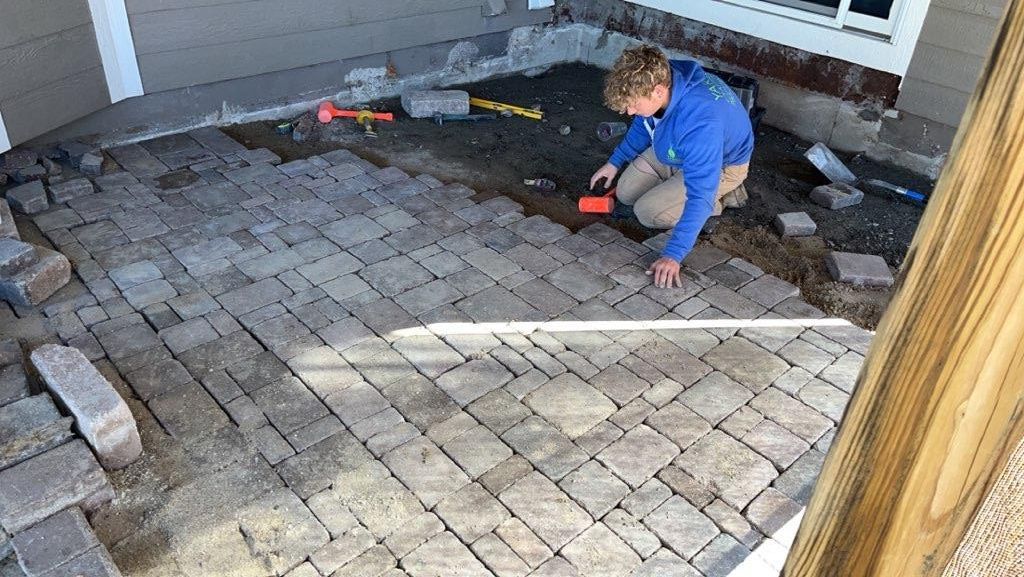
A patio is only as stable as the material supporting it. Improper excavation, inadequate base preparation, poor compaction and drainage problems can eventually show themselves at the surface.
That’s why patio construction really starts before the first paver is ever installed.
LOCAL INSIGHT — KANSAS CONDITIONS MATTER
Kansas properties deal with changing weather, moisture and soil conditions throughout the year. That’s another reason the structure underneath a hardscape deserves just as much attention as the finished surface.
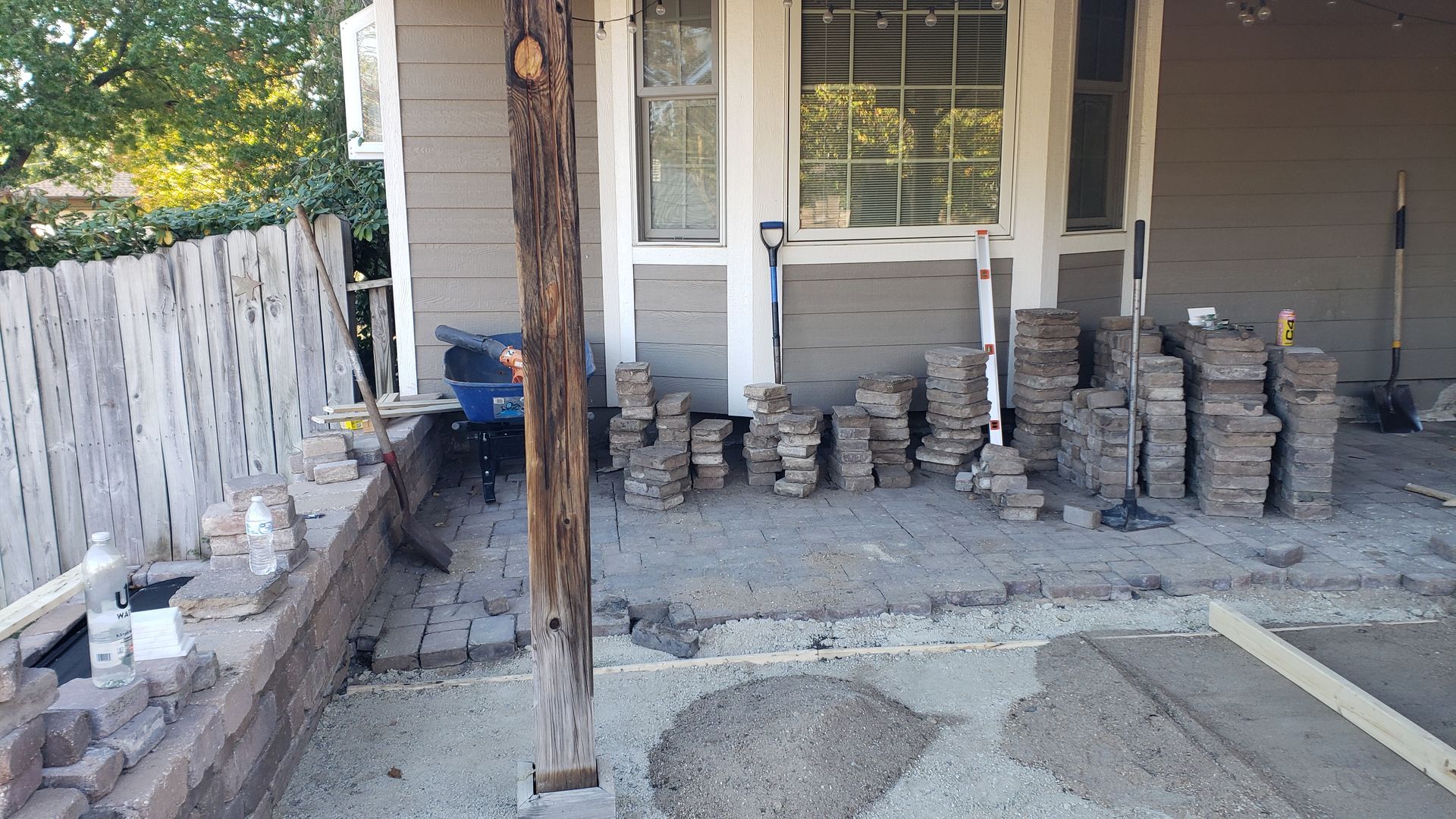
Step 1: Proper Patio Construction Starts With Excavation
Simply removing the grass and putting material over the existing soil isn’t enough.
The area needs to be excavated to create room for the complete patio system while also establishing the correct finished elevation and drainage.
The existing conditions matter too.
Soil, slope, nearby structures, access and where water currently travels can all affect how a patio project should be approached.

Long-term patio performance starts before the first paver is installed.
IAN’S ADVICE
If you’re getting estimates for a patio, don’t just ask what kind of paver the contractor uses.
Ask what’s going underneath it.
Once the patio is finished, you’re never going to see most of the construction that determines how well it performs.
Optional: Bold only the sentence: “Ask what’s going underneath it.”
Do not use an icon or decorative graphic. The strength of this box is that it sounds like direct advice from the owner.
Step 2: The Patio Base Is Doing the Real Work
The finished pavers may be what you see, but the compacted aggregate underneath them is what creates the foundation for the patio.
Base material needs to be properly installed and compacted rather than simply dumped into the excavation.
This is one of the most important differences between looking at a finished patio and understanding how that patio was actually built.
Once the pavers are installed, all of this disappears.

WHAT SHOULD BE UNDER A PAVER PATIO?
- Properly prepared subgrade
- Compacted aggregate base
- Correct bedding material for the paver system
- Properly installed pavers
- Stable edge restraint
- Appropriate pitch and drainage
The exact construction system can vary based on the paver, site conditions and project design, but the important point is that a patio is a built system, not simply a layer of decorative pavers placed over the ground.
Step 3: Drainage Has to Be Part of the Patio Plan
Water and hardscapes need to be considered together.
Before installing a patio, we need to understand questions like:
- Where does the property naturally drain?
- Where are the downspouts?
- Which direction should the patio pitch?
- Where will water go once it leaves the patio?
- Could the new patio interfere with an existing drainage path?
A beautiful patio that creates a water problem somewhere else isn’t a successful project.
That’s why at Yardcrafters, we look at the surrounding property—not simply the rectangle where the homeowner wants pavers.
PRO TIP
When you’re planning a patio, look at the area during or immediately after a heavy rain.
Where the water travels today can tell you a lot about what needs to be considered before construction begins.

Patio construction has to account for the surrounding grade and where water will go after the project is complete.
Step 4: Edge Restraint and Installation Details Matter Too
The perimeter of a paver patio needs to remain stable.
Without proper construction around the outside of the patio, pavers can gradually move outward and joints can begin opening.
These aren’t necessarily the exciting parts of choosing a patio.
They’re also the kinds of details that determine whether you’re still happy with the project years later.
Don’t Choose a Patio Contractor Only From a Finished Picture
Pinterest, websites and project galleries are fantastic places to get ideas.
Use them.
Look at colors, patterns, borders, seating areas, steps and the overall style you want.
But when it comes time to choose who actually builds it, look beyond the finished photograph.
Ask about the construction process.
Ask about excavation.
Ask about the base.
Ask about drainage.
Ask what happens underneath the patio.

What you see—and what you don’t see—both matter.
WHAT TO ASK A PAVER PATIO CONTRACTOR
Before hiring a contractor to build a paver patio, ask:
- How will the area be excavated?
- What base material will be used?
- How will the base be compacted?
- How will drainage and patio pitch be handled?
- What will keep the perimeter of the patio stable?
- Can you show me construction photos, not just finished projects?
Planning a Patio or Outdoor Living Project for Next Year?
If a new patio or outdoor living area is something you’re considering for 2027, you don’t need to have every detail figured out today.
Start with how you want to use the space.
Do you want somewhere to entertain?
A place for a grill?
More room for outdoor furniture?
A walkway connecting different parts of the property?
Steps to handle an elevation change?
Maybe the patio is only one piece of a larger landscape renovation.
Once we understand what you’re trying to accomplish, we can start working through the practical side of the project—including layout, drainage, materials and construction.
Start Planning Your Outdoor Space
Yardcrafters designs and installs patios, walkways, steps, retaining walls and other landscape and hardscape improvements throughout Topeka and Northeast Kansas.
If you’re thinking about improving your outdoor space next year, now is a good time to start the conversation.
📞 (785) 608-2970
🌐
www.yardcraftersks.com
📧
yardcraftersoftopeka@gmail.com
Serving Topeka & Northeast Kansas Since 2016

About Yardcrafters
Yardcrafters LLC is a locally owned lawn, landscape and hardscape company serving Topeka and Northeast Kansas.
Since 2016, we’ve helped homeowners improve their outdoor spaces through landscape installation and renovation, retaining walls, patios, drainage solutions, lawn care and other outdoor improvements.
Our mission is to honor God by utilizing the talents God has given us to serve our neighbors while beautifying their outdoor spaces.
About the Author
Ian Robbins is the owner of Yardcrafters LLC in Topeka, Kansas. Ian and the Yardcrafters team work with homeowners throughout the Topeka area to solve landscape, drainage, hardscape and outdoor-living challenges.