September 28, 2026
Leaning, cracking or separating retaining wall? Learn 7 warning signs of retaining wall failure, why Kansas walls fail and when replacement may be needed.

7 Signs Your Retaining Wall May Be Failing—and What Topeka Homeowners Should Do About It
Retaining walls usually don't fail overnight.
They give clues.
A wall may begin leaning. Blocks or timbers separate. Soil washes through. Water collects behind it. The ground above starts settling. Or a wall that once looked straight simply doesn't anymore.
Those symptoms matter because a retaining wall isn't merely decorative. Its job is to hold back soil while managing the forces created by the slope, water and the material behind it.
Here in Northeast Kansas, our soils, rainfall, summer heat and winter freeze-thaw cycles can expose weaknesses in a wall that wasn't properly designed or constructed—or simply reached the end of its useful life.
Here are seven warning signs worth watching.
1. The Wall Is Leaning or Bowing

A retaining wall should not progressively lean outward toward the lower side of the slope.
Movement can indicate excessive pressure behind the wall, inadequate drainage, insufficient reinforcement, base movement or deterioration of the wall itself.
A small amount of movement doesn't tell us the entire cause. It does tell us the wall deserves a closer look.
Ian's advice:
Don't judge a retaining wall only by whether it is still standing. Look down the length of it. Changes in alignment, bulges and separation can tell you considerably more than one straight-on photograph.
2. Blocks, Timbers or Courses Are Separating
Timber eventually deteriorates. Block walls can shift. Individual sections may move differently from adjacent sections.
When gaps that weren't previously present continue developing, something is moving.
The question isn't simply “Can we push it back?”
The better question is why it moved in the first place.

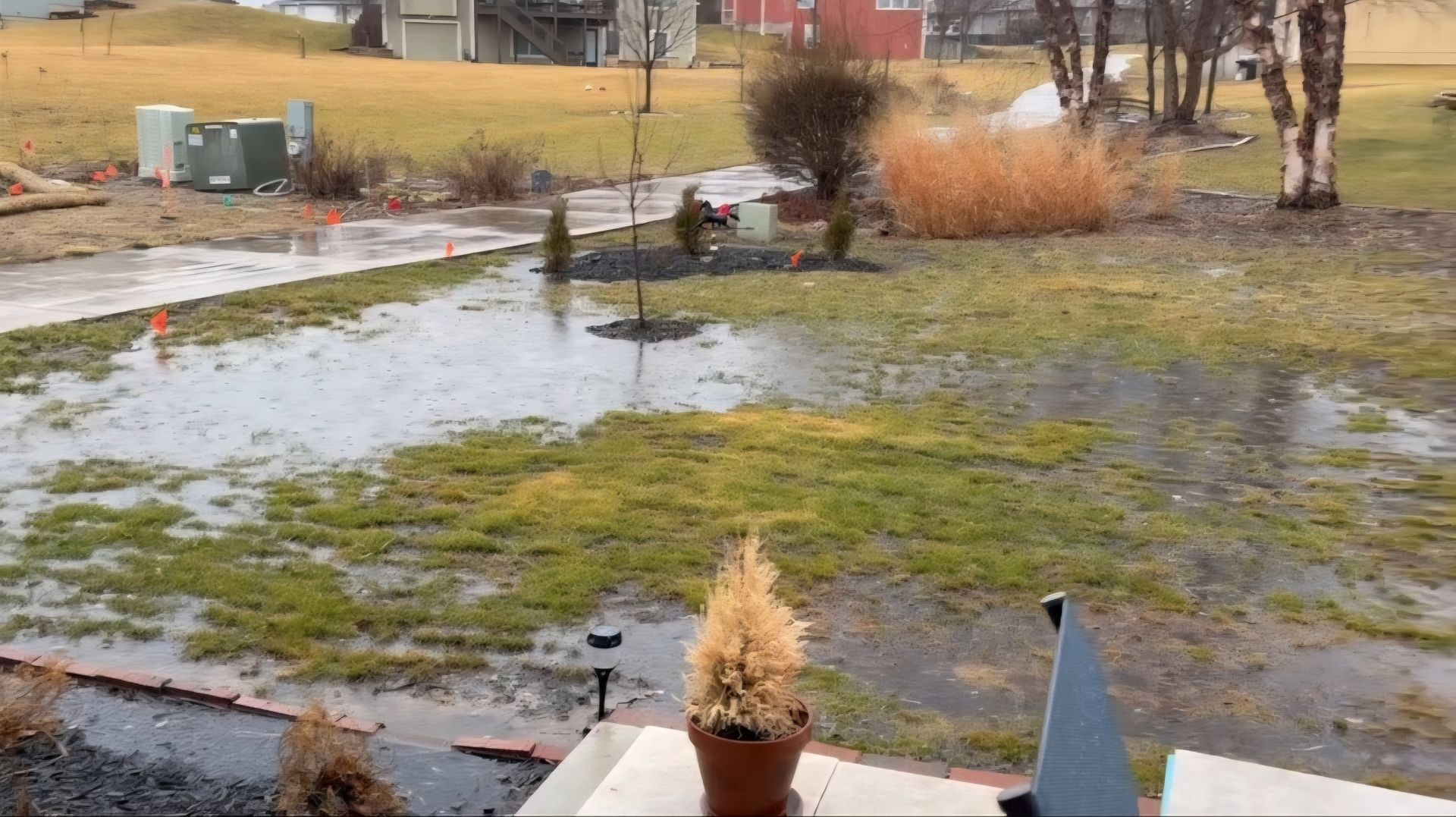
Water is one of the biggest factors affecting retaining-wall performance.
Saturated soil weighs more and creates additional pressure behind the wall. That's why properly managing water is an important part of retaining-wall construction.
A retaining-wall drainage system may involve drainage aggregate, drainage pipe and a safe outlet depending on the wall and site.
A retaining wall and the drainage behind it should be considered one system—not two unrelated projects.
4. Soil Is Washing Through or Around the Wall
Erosion, washed-out soil and recurring voids can indicate that water isn't moving through or around the property as intended.
Replacing washed-out dirt without understanding where the water is coming from may only temporarily hide the problem.
5. The Ground Above the Wall Is Settling
Watch the grade above the wall.
Depressions, settling soil, changes around patios or landscape beds, and areas pulling away from the top of the wall can indicate movement below.
The wall may only be the most visible piece of a larger grading or drainage problem.
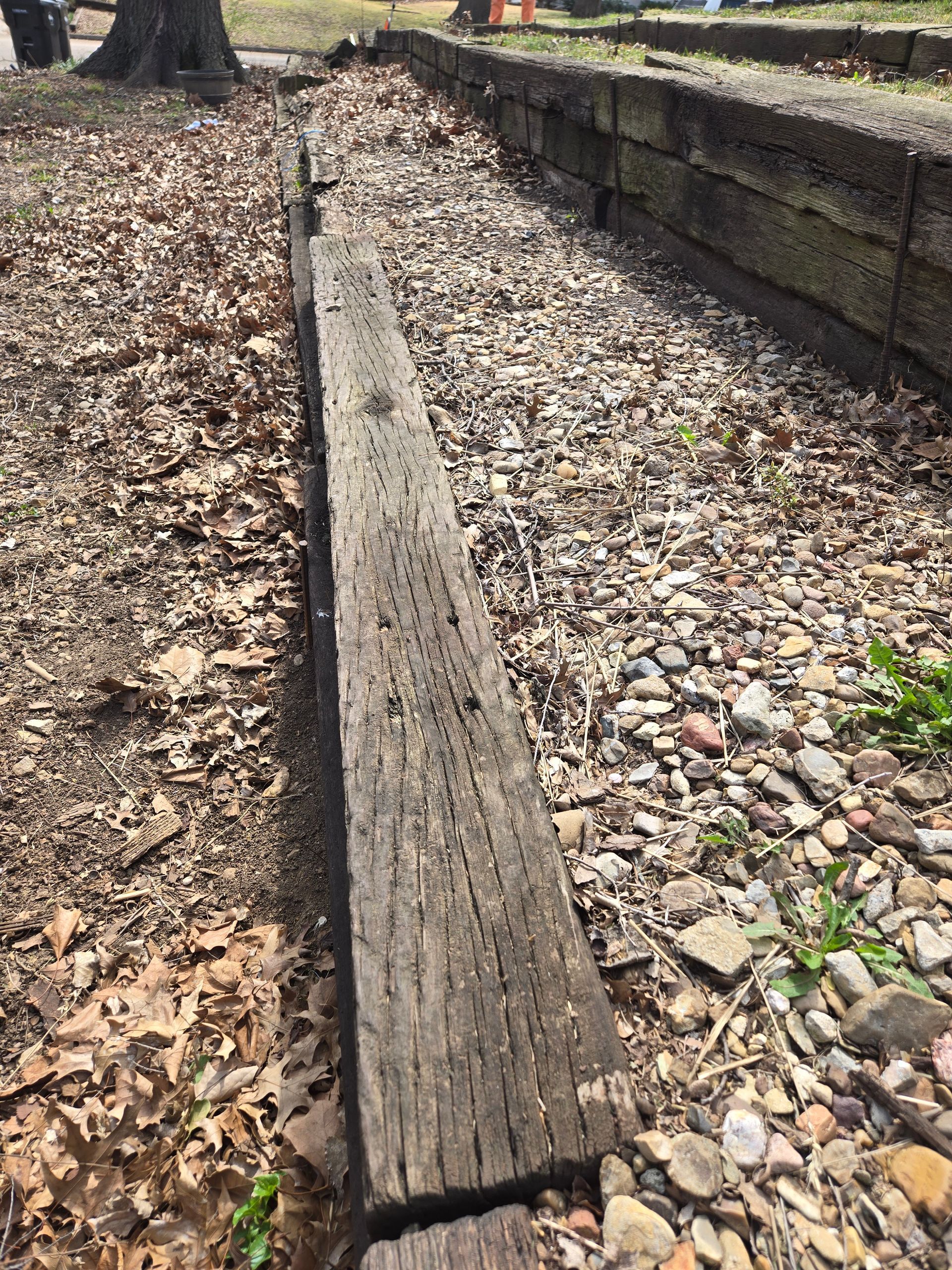
6. Timber Walls Are Rotting or Losing Their Structure

Timber retaining walls can perform for years, but they don't last forever.
As wood deteriorates, the wall can lose the strength it originally had. Hardware may loosen, individual timbers may move and the system can progressively deform.
At that point, repeatedly replacing individual boards may no longer make economic sense.
7. You're Repairing the Same Wall Again and Again
Repeated movement deserves diagnosis.
A repair can sometimes be appropriate. But if the underlying base, drainage, reinforcement or wall system is inadequate, cosmetic repairs won't change what's happening underneath.
Repair the symptom—or correct the system?
That's the distinction homeowners should be asking about.
What Actually Goes Under a Retaining Wall?

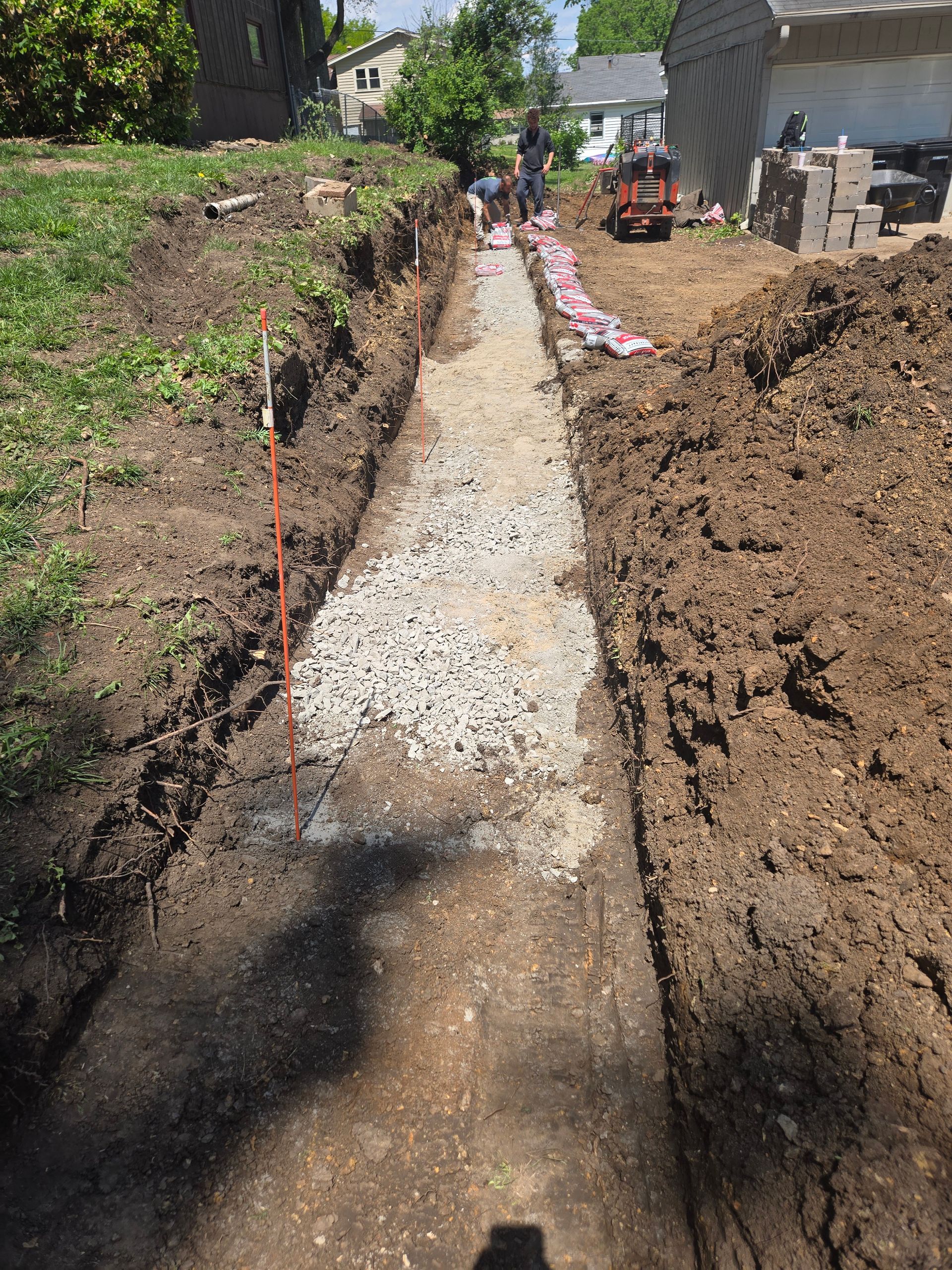
Excavated retaining wall base preparation by Yardcrafters in Topeka Kansas
The finished blocks are the part everyone sees.
A large portion of what determines how a retaining wall performs, however, is eventually buried.
Proper retaining-wall construction can involve excavation, a properly prepared and compacted base, correctly placed block, drainage aggregate and pipe, reinforcement where required, and careful management of the grade above and below the wall.
The exact construction requirements depend on wall height, site conditions, soil, loads, drainage and the wall system being used.
Ian's advice:
When you're comparing retaining-wall estimates, don't compare only the block. Ask what is going underneath it and behind it. That's where a large portion of the project disappears when we're finished—and where a lot of its long-term performance is determined.
A Real Topeka Retaining Wall Transformation

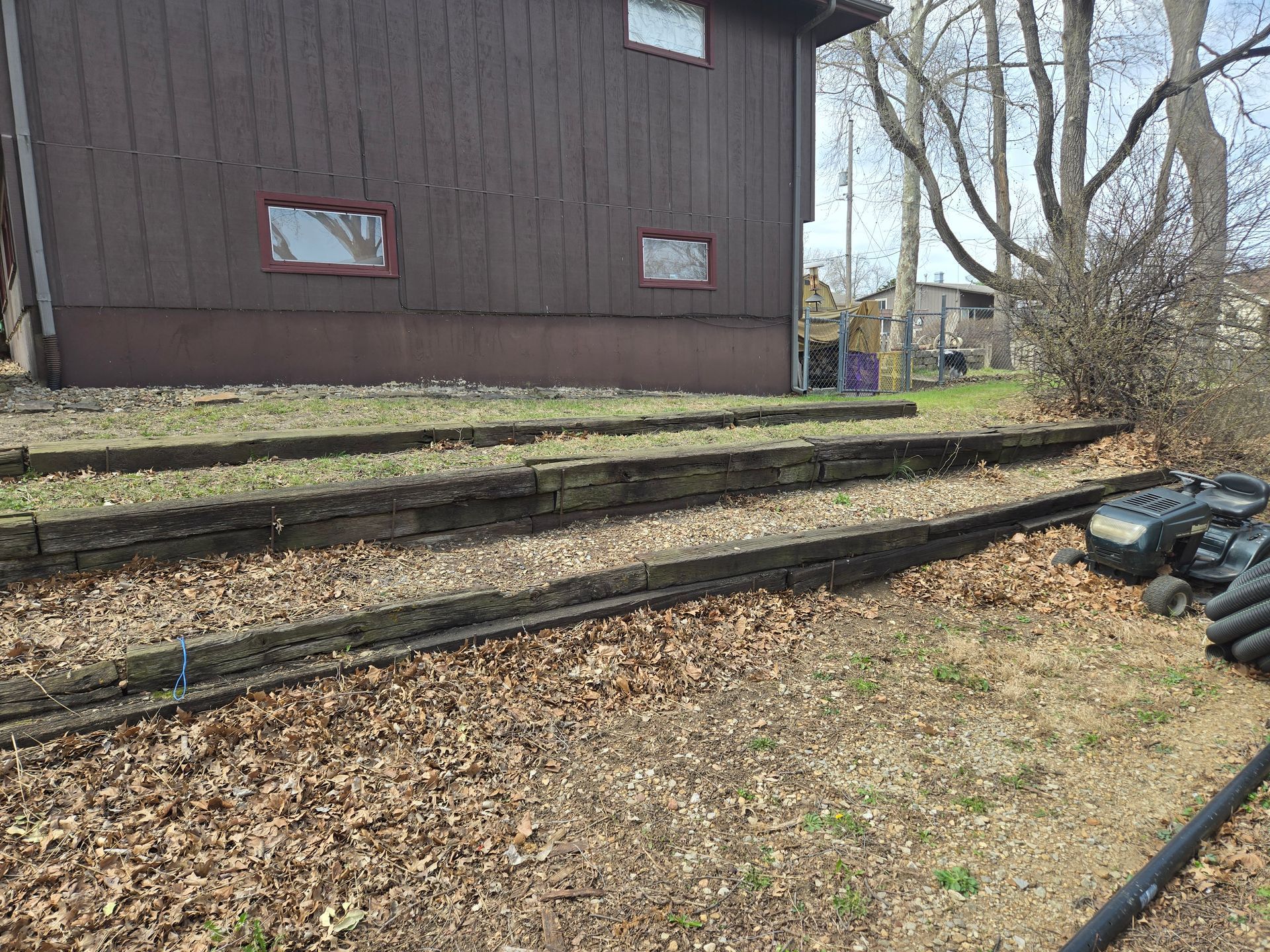
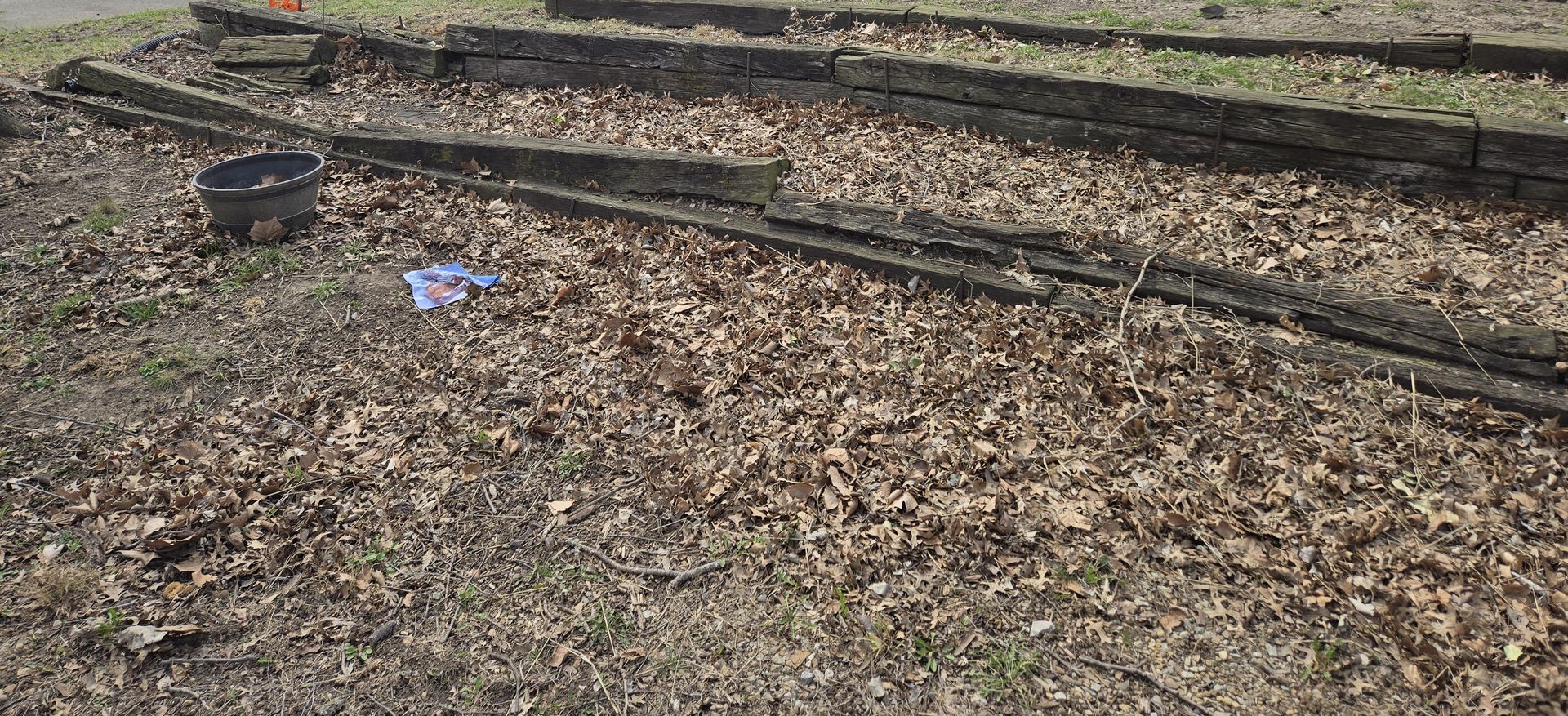
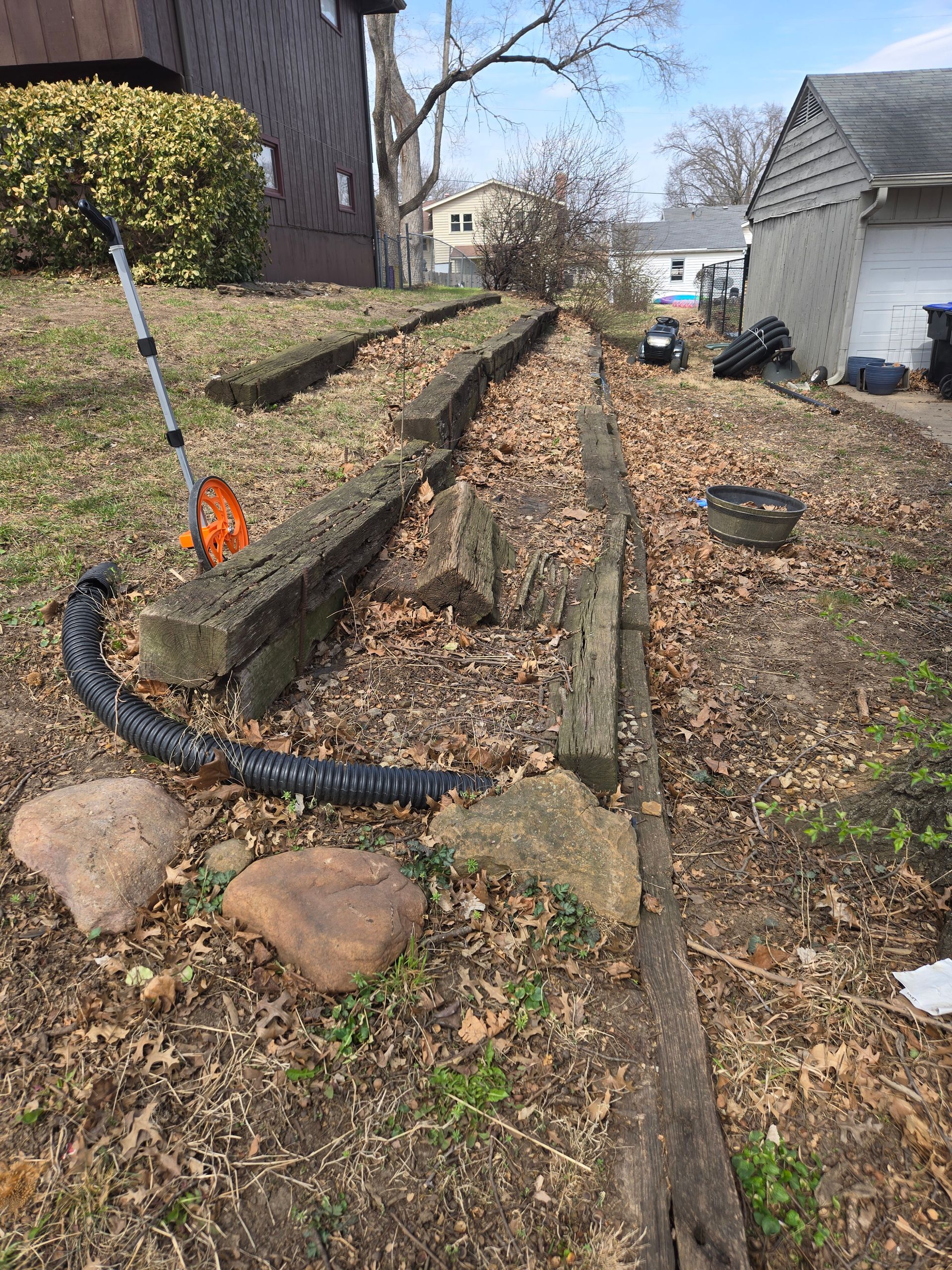
Before — aging timber retaining walls had reached the point where replacement made more sense than continued repair.

During — the old system was removed and the site excavated so the new wall could be built from the base up.

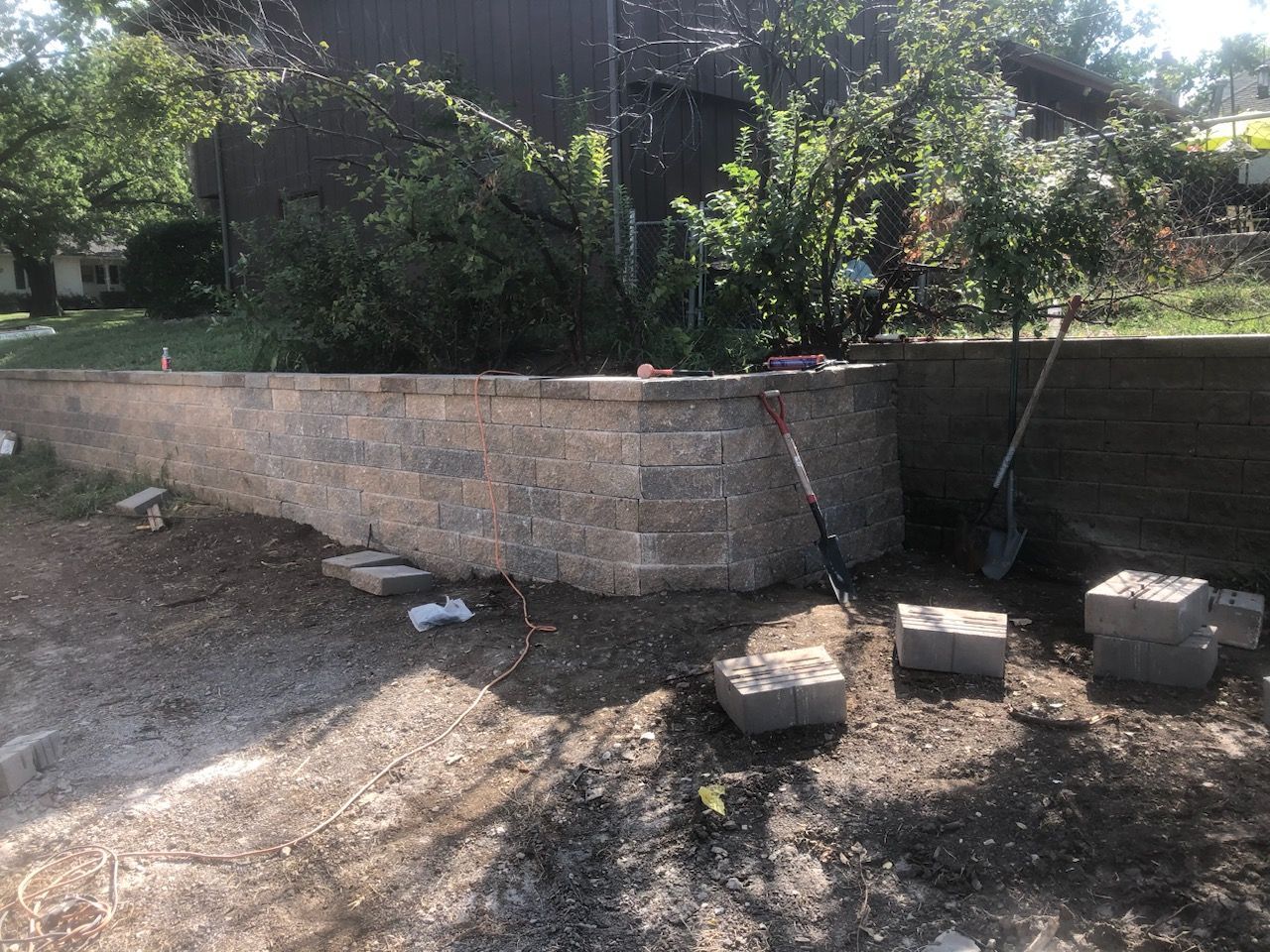
Construction — the new block wall takes shape, but much of the important work is already underneath and behind what you see.

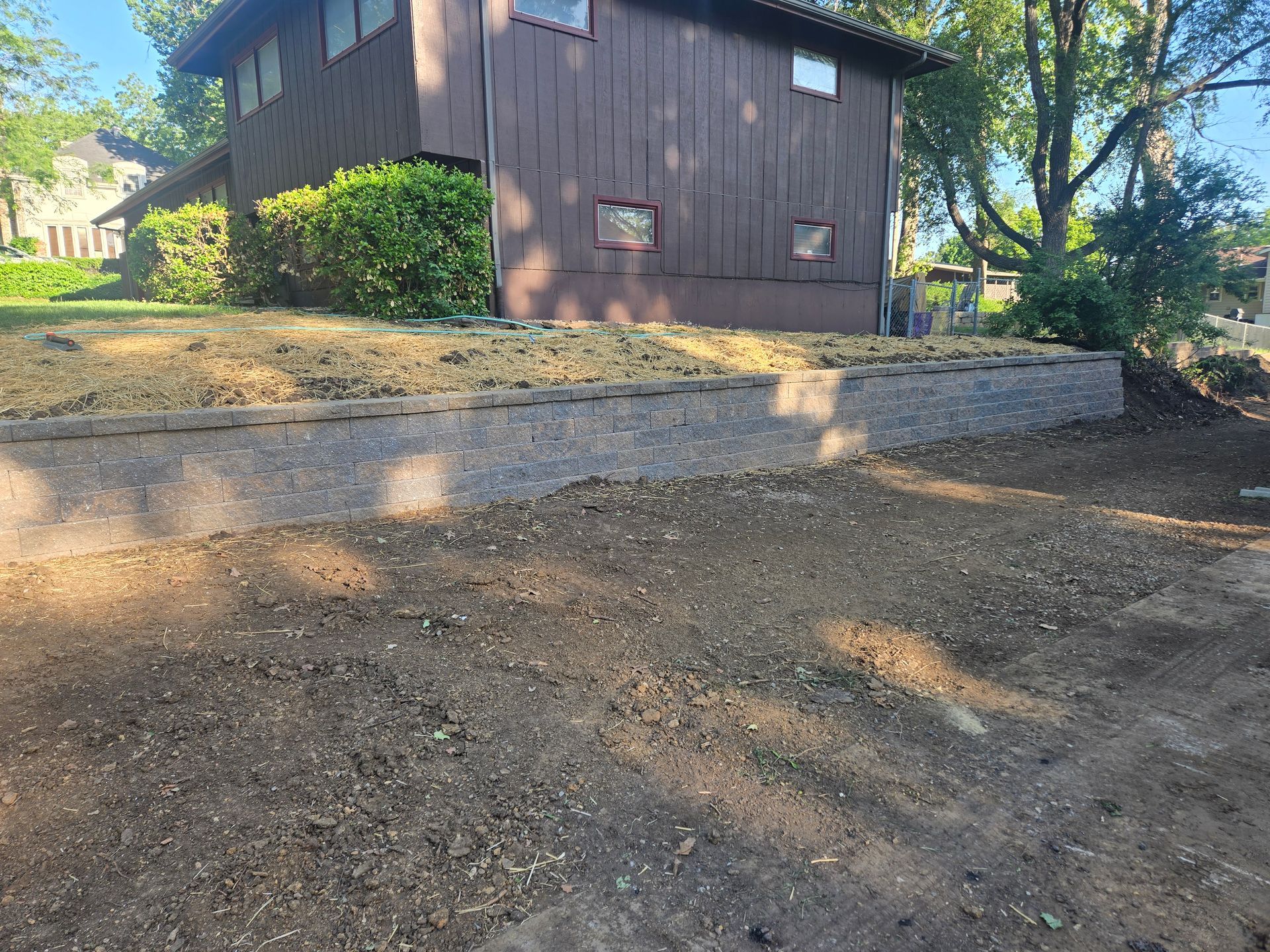
After — a completely rebuilt retaining-wall system with a clean, durable finished appearance.
This project is a good example of why we don't think of retaining-wall replacement as simply exchanging one material for another.
The goal is to understand the slope, remove the failed or deteriorated system, prepare the site correctly and build the replacement as a complete system.
Can a Failing Retaining Wall Be Repaired?
Sometimes.
Whether repair or replacement makes sense depends on the cause and extent of the movement, the condition of the existing materials, drainage, base conditions and the wall's overall construction.
A localized issue may have a localized solution.
A wall with widespread deterioration or movement may be a poor candidate for continued patching.
A site evaluation is the best way to determine which situation you're dealing with.
How Much Does a Retaining Wall Cost in Topeka?
Retaining-wall pricing varies substantially based on wall height, length, excavation, access, soil conditions, drainage requirements, reinforcement and materials.
Yardcrafters has already put together a detailed local pricing guide.
When Should You Have a Retaining Wall Looked At?
You don't need to wait until a wall collapses.
If you're seeing increasing lean, separation, erosion, drainage problems, deteriorating timbers or changes in the ground around the wall, having it evaluated earlier gives you more time to understand the problem and plan appropriately.
And planning doesn't mean the project has to begin tomorrow.
For larger landscape projects, understanding the scope and budget ahead of time can make the eventual project considerably easier to plan.
Concerned About Your Retaining Wall?
Yardcrafters installs retaining walls throughout Topeka and Northeast Kansas and backs qualifying retaining-wall installations with our lifetime installation warranty for installation-related failure.
Serving Topeka since 2016.
📞 (785) 608-2970
📧
yardcraftersoftopeka@gmail.com
🌐
www.yardcraftersks.com