November 3, 2026
Uneven walkway or deteriorating outdoor steps? Learn what Topeka homeowners should check before winter, from settling pavers to drainage problems.
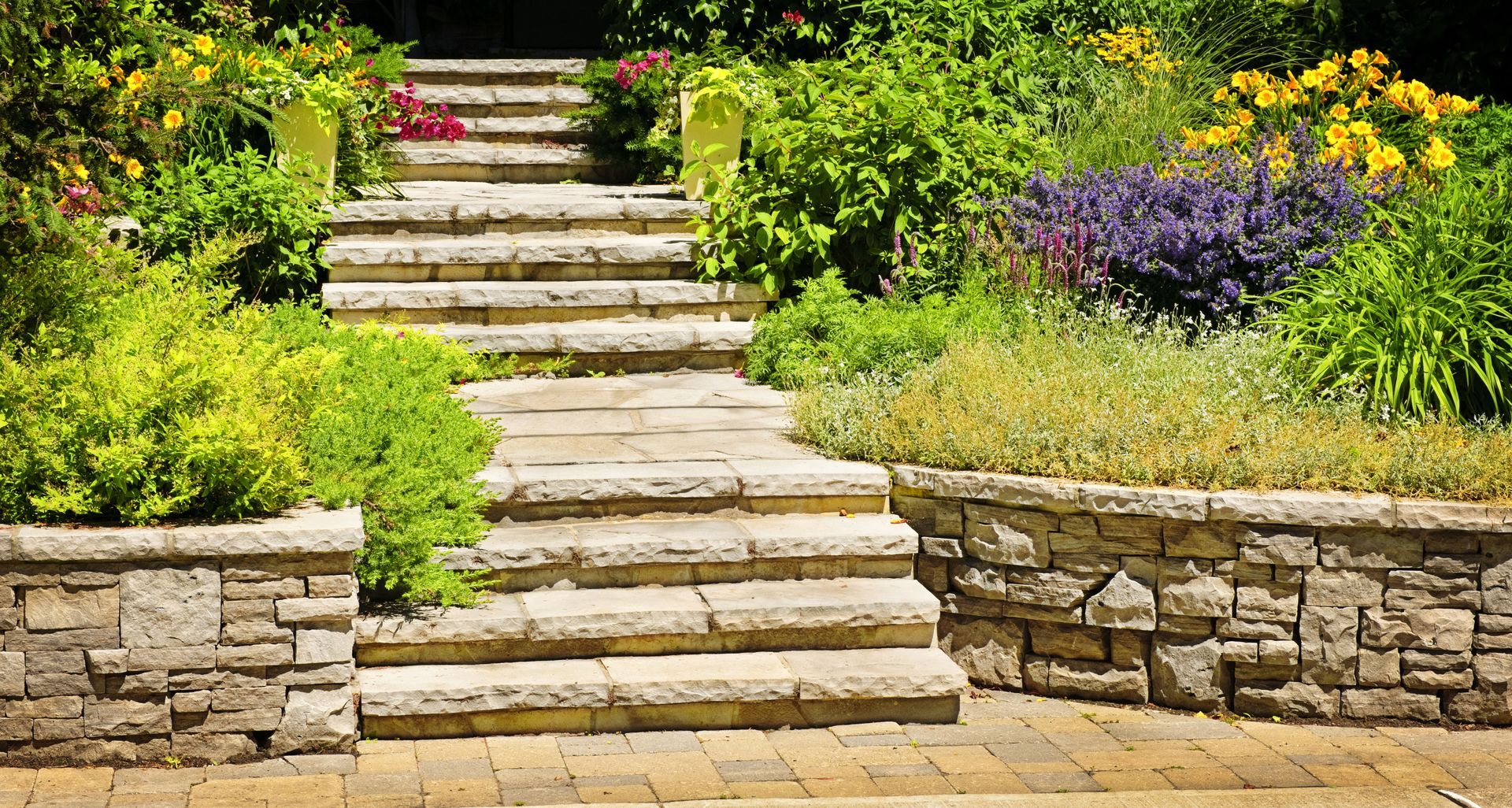
Walkways and outdoor steps should be evaluated as part of the entire landscape, including drainage, slopes, and access.
Most homeowners use their front walkway every day without giving it much thought.
You walk from the driveway to the front door. You carry groceries inside. Guests follow the same path when they visit.
But over time, you may start noticing things that weren't there before.
A paver sits higher than the one beside it.
A step feels uneven.
Water collects in the same spot after every rain.
Or the route to the house has become awkward because the surrounding landscaping has changed.
These issues don't automatically mean the entire walkway needs to be replaced.
Sometimes a limited repair or reset may be appropriate. Other times, the problem involves the base, drainage, or layout and requires a more substantial solution.
For homeowners in Topeka and Northeast Kansas, late fall is a useful time to evaluate these conditions before winter weather makes outdoor access more difficult.
Here's what to look for and how to think through the options.
THE QUICK ANSWER
Check for uneven surfaces, loose steps, water accumulation, poor drainage, and changes in elevation.
A small problem may be suitable for repair, but recurring settling or drainage problems may require rebuilding part or all of the affected system.
The right solution depends on the existing conditions and how the walkway is constructed.
1. Look for Pavers or Stones That Have Shifted
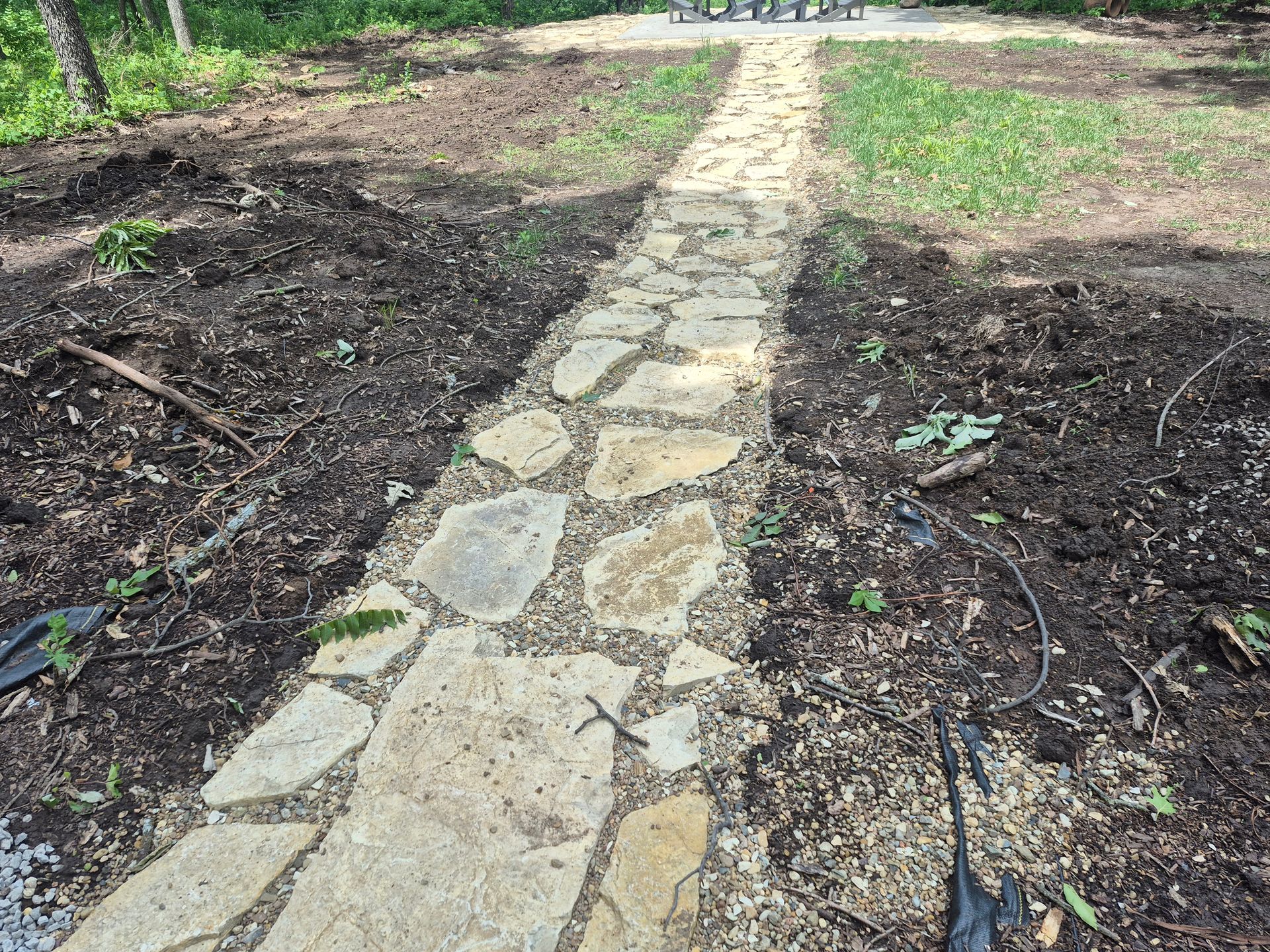
A walkway should provide a reasonably consistent surface for people moving through the property.
When individual pavers or stones become noticeably uneven, they can create an uncomfortable walking route and potential trip hazards.
The cause isn't always visible from the surface.
A paver may have shifted because the supporting material settled, an edge restraint moved, water affected the base, or the surrounding soil changed.
In some situations, a limited section can be reset.
In others, simply lifting a paver and adding a little sand may not address the underlying issue.
That's why we recommend looking at the entire affected area before deciding on a repair.
A surface problem may be a symptom of something happening underneath.
2. Pay Attention to Loose or Uneven Outdoor Steps
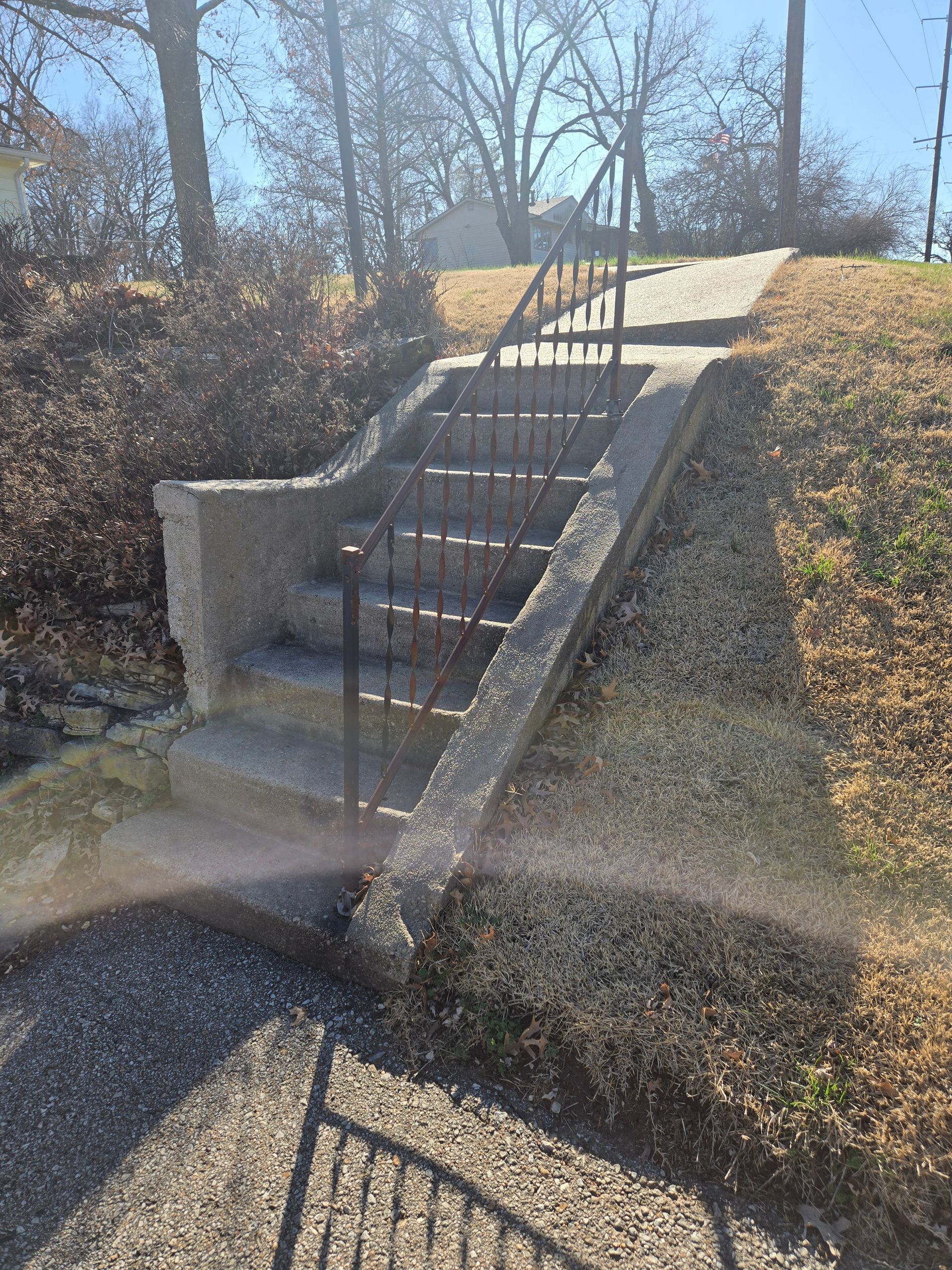
Outdoor steps deserve special attention because people rely on them to move between different elevations.
A loose tread, inconsistent step height, deteriorated support, or shifting material may make a stairway difficult to use.
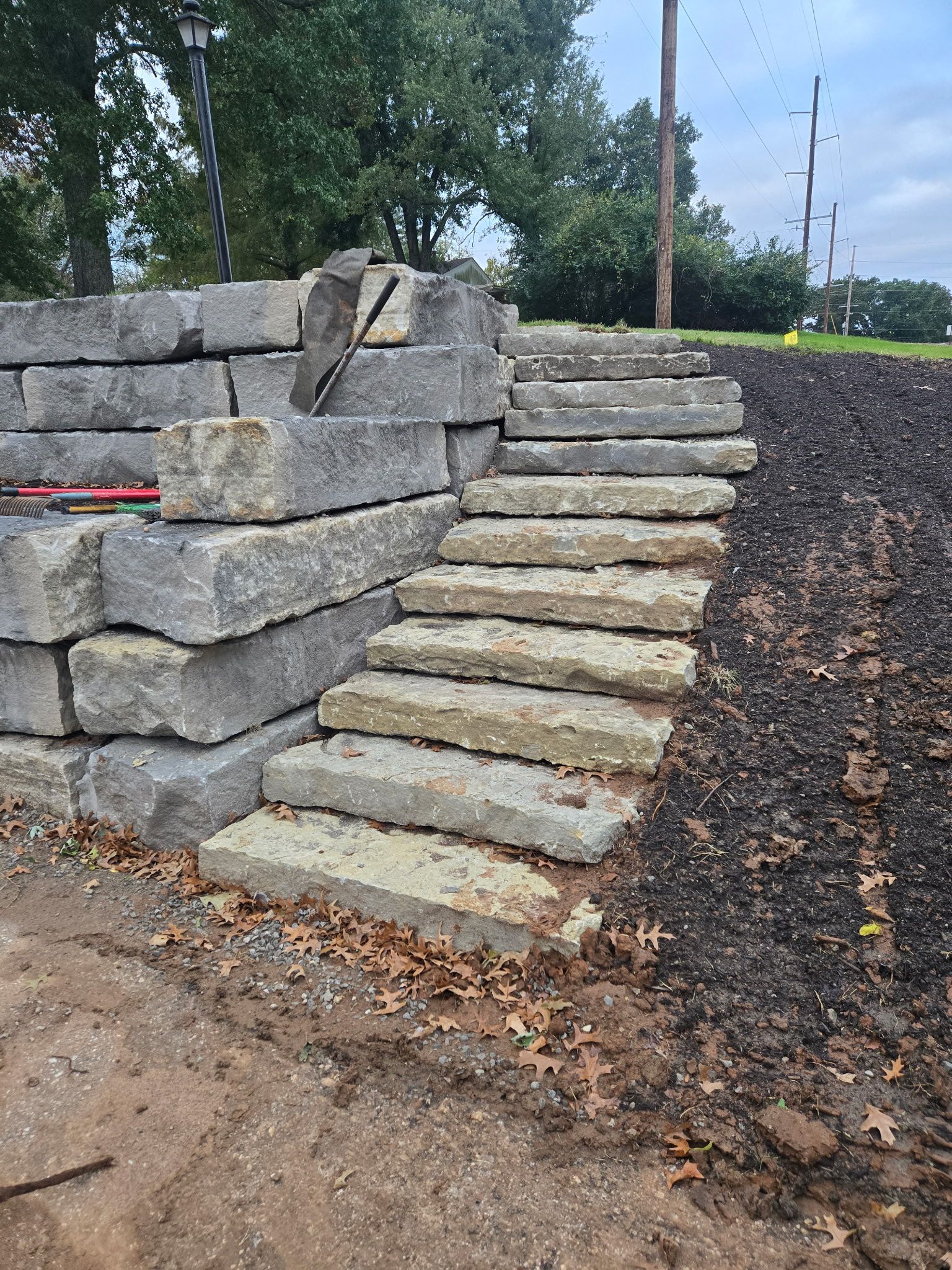
Some outdoor steps are part of a larger retaining-wall or landscape system.
Others connect a patio, driveway, sidewalk, or sloped yard.
The appropriate solution depends on how the steps were built and whether the supporting structure remains stable.
A minor cosmetic issue is different from a structural problem.
If steps appear unstable, restrict access until they can be properly evaluated rather than assuming they are safe to continue using.
Steps should be evaluated for stability and function, not appearance alone
IAN'S ADVICE
If you're comparing estimates for new outdoor steps, ask how the steps will be supported and how drainage will be handled. The visible material is only part of the finished system.
3. Watch Where Water Collects After Rain
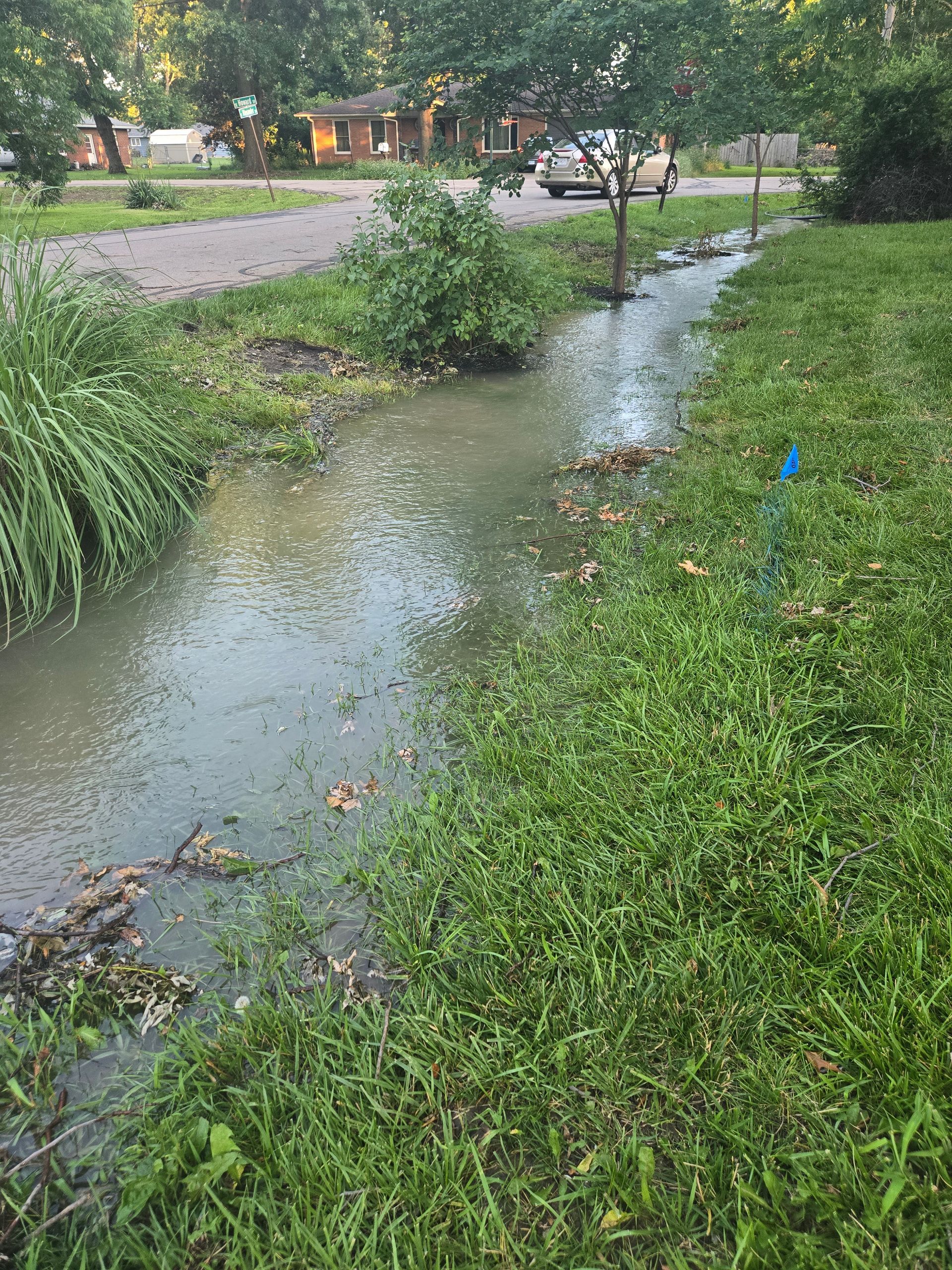
One of the most useful times to evaluate a walkway is during or shortly after a rain.
Does water collect in a low area?
Does runoff cross the walking surface?
Does a downspout discharge toward the steps?
Does water move toward the foundation instead of away from it?
These observations can help identify problems with the surrounding grade or drainage.
Water accumulation does not necessarily mean the walkway was installed incorrectly. Conditions can change over time, and nearby improvements can affect how water moves through a property.
But when the same area repeatedly holds water, the cause deserves attention.
As temperatures eventually drop below freezing, standing water can also create slippery conditions.
A good solution should consider where the water comes from and where it needs to go—not merely cover the affected area with another material.
Fixing the surface without addressing recurring water problems may leave the underlying issue unresolved.
4. Consider Whether the Walkway Still Makes Sense
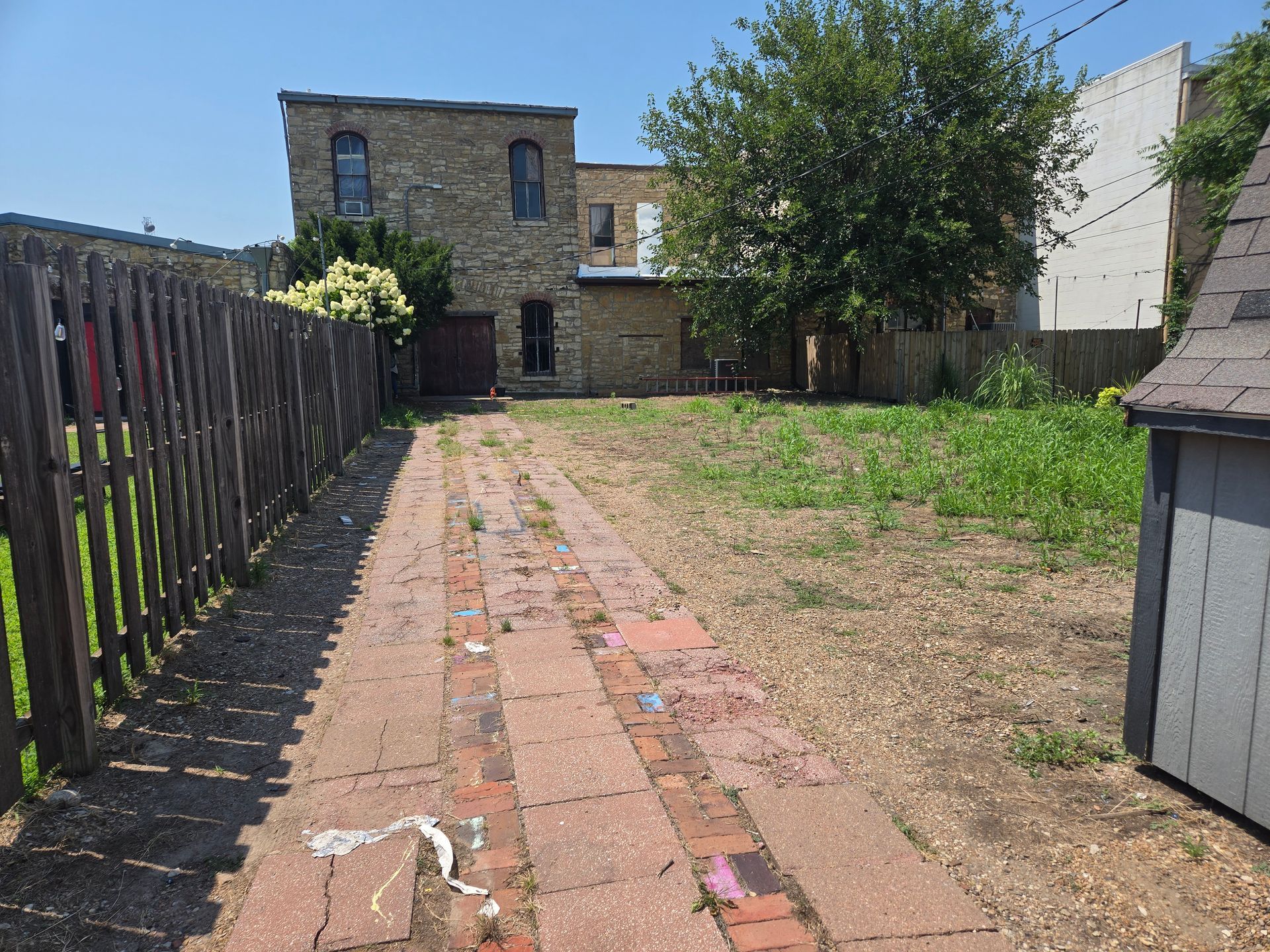
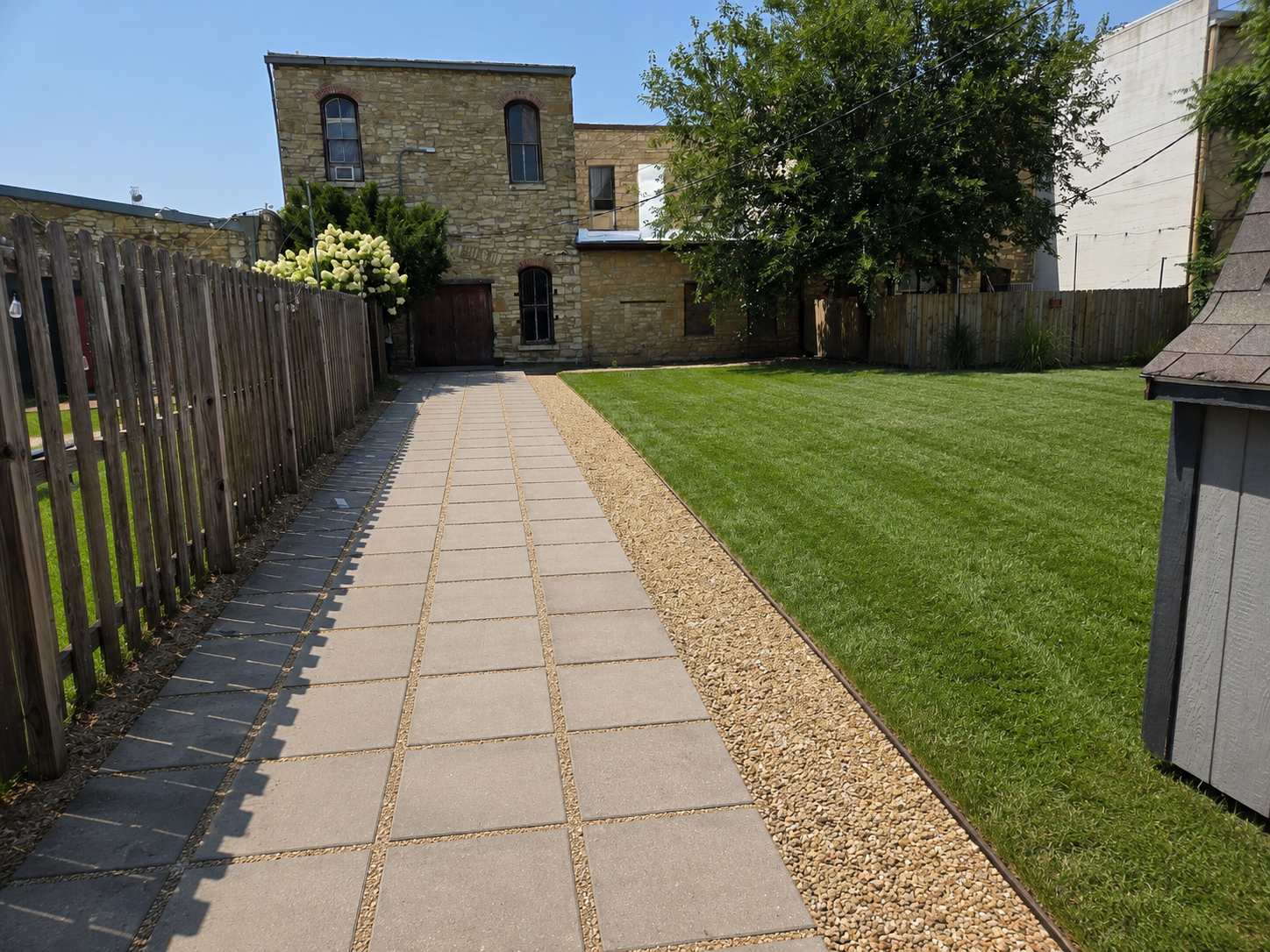
Not every walkway problem involves damaged materials.
Sometimes the route itself is inconvenient.
A narrow path may be difficult to navigate while carrying items.
A walkway may lead people through an awkward part of the yard.
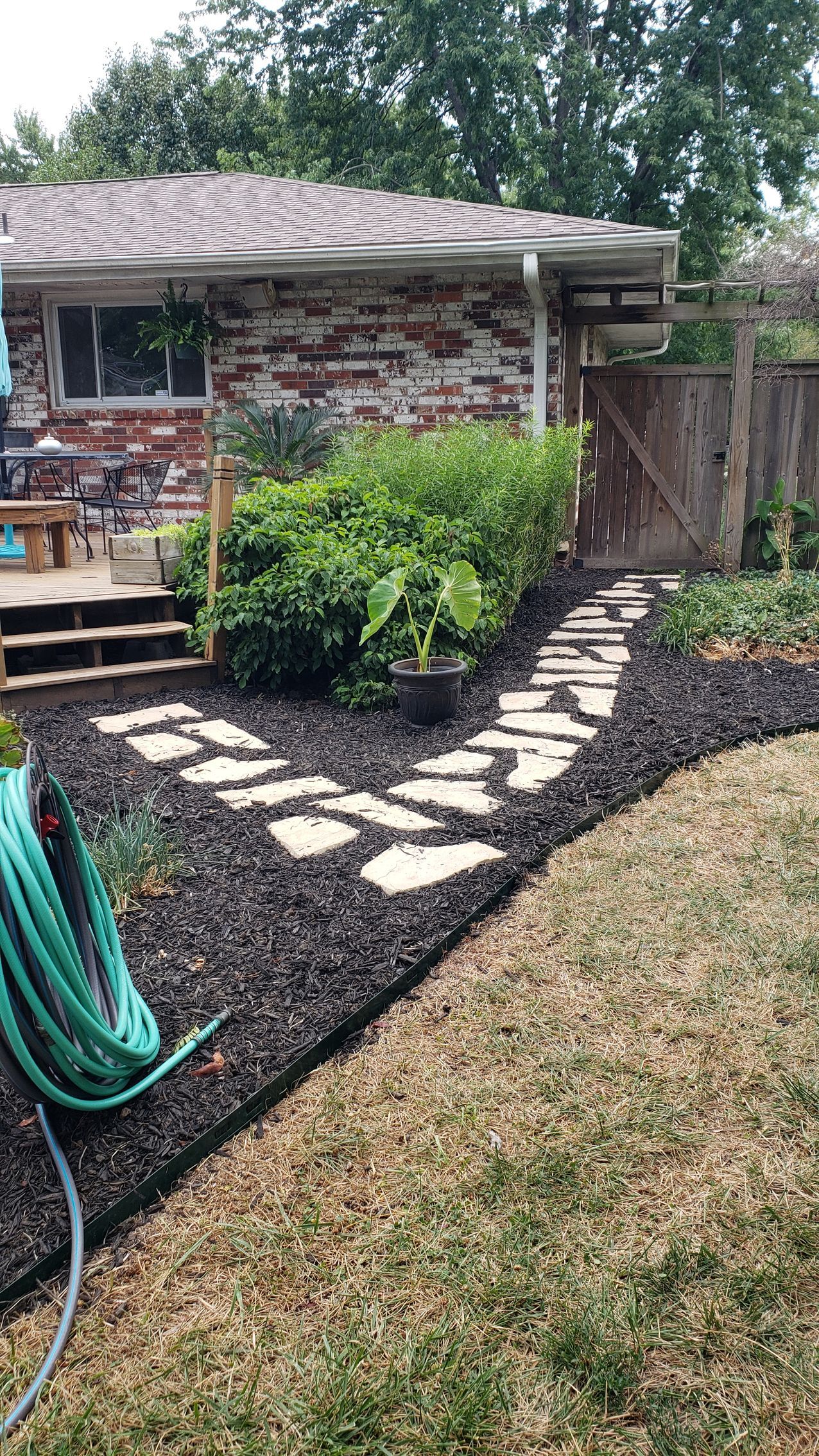
Or a sloped area may benefit from a different combination of walkway sections, steps, and landscape improvements.
When renovating an outdoor space, it's worth considering how people actually move through the property.
A well-planned walkway should connect the places homeowners need to reach while fitting the surrounding landscape.
The design also needs to consider drainage, surface stability, maintenance, and changes in elevation.
A walkway should connect the property logically—not simply fill an empty strip of ground.
5. Should You Repair, Reset, or Replace the Walkway?
There's no universal answer to whether an existing walkway should be repaired or replaced.
The decision depends on the materials, construction, age, surrounding conditions, and extent of the problem.
A relatively small section may be suitable for resetting if the existing materials can be reused and the supporting conditions can be corrected.
Other situations may require rebuilding the affected section with proper excavation, base preparation, compaction, edge restraint, and drainage.
A complete redesign may be appropriate when the walkway's location or function no longer meets the homeowner's needs.
The important thing is to avoid spending money on a temporary cosmetic improvement when the underlying problem requires a more substantial solution.
BEFORE YOU APPROVE A WALKWAY REPAIR
Ask whether the proposed scope addresses the cause of the problem, what materials will be reused, and whether drainage or base reconstruction is included.
6. Think About Winter Maintenance Before Choosing Materials
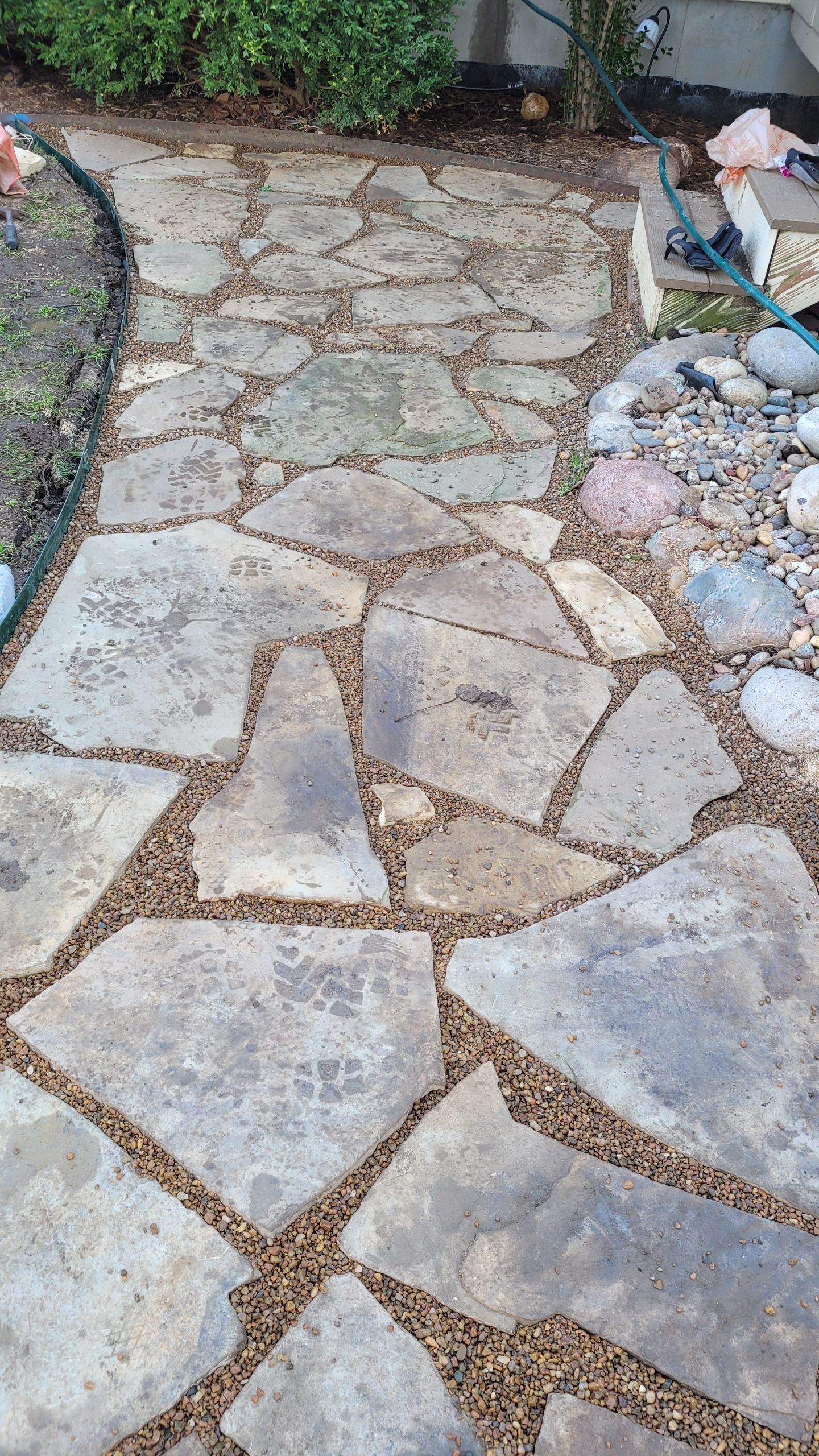
A walkway should be evaluated for how it will be used throughout the year.
That includes the colder months.
Homeowners should consider whether the surface can be cleared of snow, whether water tends to accumulate, and whether nearby planting beds may be affected by snow removal or deicing products.
Different pavers, natural stones, concrete surfaces, and installation systems may have different maintenance requirements.
Before using a deicing product, check that it is suitable for the specific surface and follow the manufacturer's instructions.
Excessive salt use can also damage nearby plants and soil.
For properties with recurring ice accumulation, correcting drainage may be an important part of the long-term solution.
Plan for the way the walkway will be used and maintained in every season.
University of Minnesota Extension: Effects of Deicing Salts on Landscapes.
7. Can You Plan a Walkway or Steps Project Now and Install Later?
Yes.
A walkway or steps project doesn't have to be installed immediately after the homeowner decides improvements are needed.
Planning ahead can be useful when the project involves multiple elements, such as grading, drainage, retaining walls, landscape beds, and connecting walkways.
The process begins with understanding what the homeowner wants to accomplish and evaluating the existing conditions.
From there, the scope can be developed around the appropriate materials, construction requirements, and available budget.
Scheduling depends on the project, weather, material availability, and the contractor's current workload.
At YardCrafters, we help homeowners throughout Topeka and Northeast Kansas evaluate hardscape and landscape improvements, whether the project is relatively small or part of a larger outdoor renovation.
Frequently Asked Questions About Walkways and Outdoor Steps in Kansas
Why do paver walkways become uneven?
Paver walkways can become uneven because of settlement, changes in supporting soil, drainage problems, insufficient base preparation, or movement of edge restraints. The cause should be evaluated before choosing a repair.
Can an uneven paver walkway be repaired without replacing everything?
Sometimes. If the issue is localized and the materials remain reusable, resetting the affected section may be appropriate. More extensive problems may require rebuilding the base or redesigning the area.
What causes outdoor landscape steps to shift?
Outdoor steps may shift because of movement in the supporting materials, drainage problems, settlement, or deterioration of the original construction. Unstable steps should be evaluated before continued use.
Can standing water on a walkway become a winter problem?
Yes. Water that collects on a walking surface can freeze when temperatures drop sufficiently, creating slippery conditions. The best long-term response may involve correcting the drainage rather than repeatedly treating the surface.
Is fall a good time to plan a walkway installation?
Yes. Fall can be a practical time to evaluate existing conditions and develop a plan. Actual installation timing depends on weather, construction requirements, materials, and contractor availability.
Does YardCrafters install walkways and outdoor steps in Topeka?
Yes. YardCrafters provides patio, walkway, landscape-step, retaining-wall, drainage, and other hardscape improvements throughout Topeka and surrounding Northeast Kansas communities.
Thinking About Improving Your Walkway or Outdoor Steps?
Whether you're dealing with uneven pavers, aging steps, drainage concerns, or a walking route that no longer works for your property, YardCrafters can help evaluate the available options.
We design and install patios, walkways, steps, retaining walls, and related landscape improvements throughout Topeka and Northeast Kansas.
Tell us what you're trying to improve, and we'll discuss an appropriate scope and current scheduling availability.
📞 (785) 608-2970
🌐 www.yardcraftersks.com
📧 yardcraftersoftopeka@gmail.com
📍 Serving Topeka & Northeast Kansas Since 2016
About the Author
Ian Robbins is the owner of YardCrafters LLC, a locally owned landscaping and hardscaping company serving Topeka and Northeast Kansas since 2016.
YardCrafters provides landscape installation and renovation, retaining walls, patios, walkways, drainage solutions, lawn care, and landscape maintenance.
Our mission is to honor God by using the talents we've been given to serve our neighbors while beautifying their outdoor spaces.