Every spring in Topeka, we start getting the same calls:
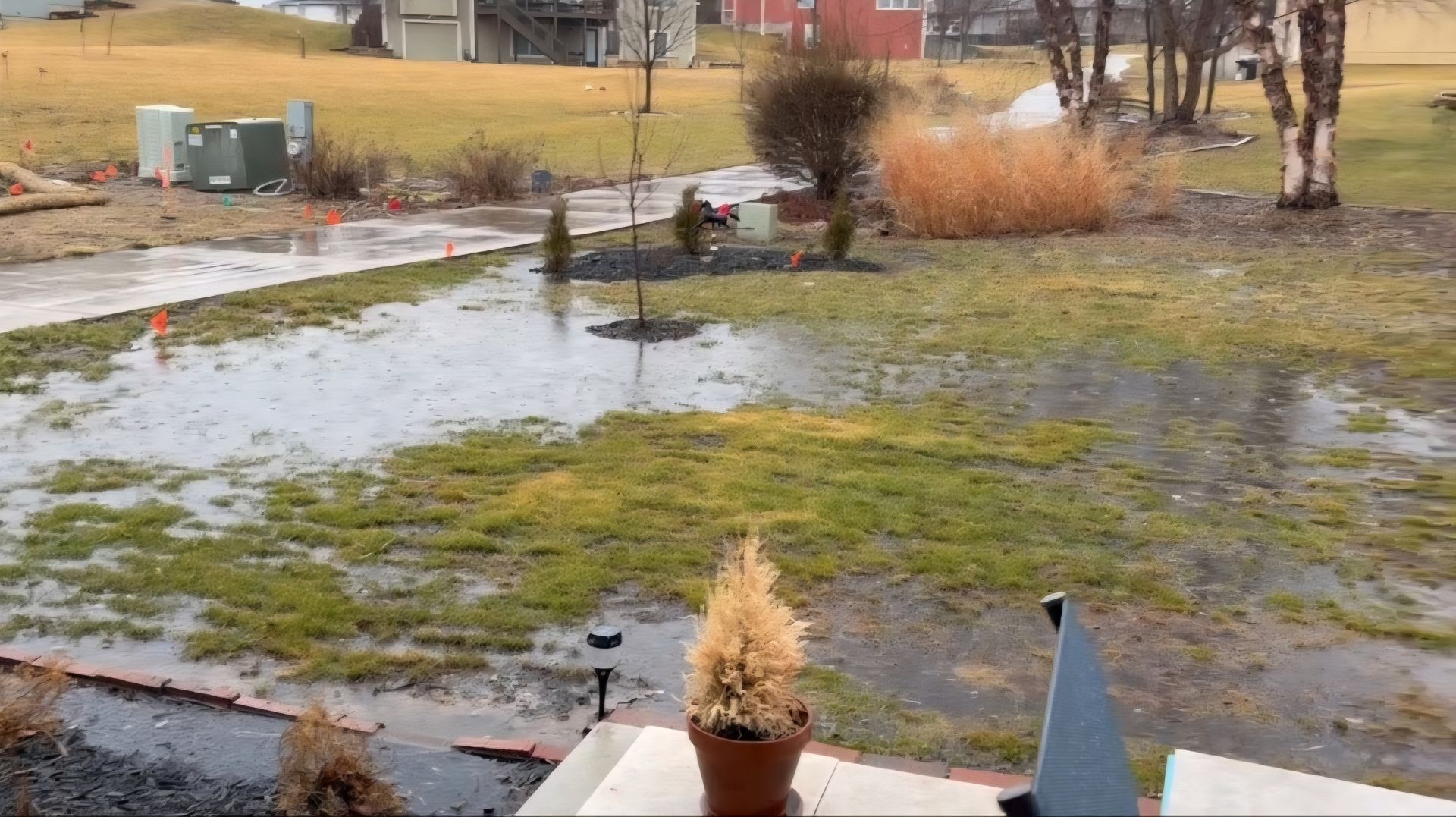
“My yard feels soggy.”
“There’s water pooling near the house.”
“Mulch keeps washing out.”
“Is this normal?”
Sometimes it is.
Sometimes it’s the beginning of a much bigger issue.
Spring is when drainage problems reveal themselves — because frozen ground, heavy rain, and thaw cycles put your property to the test.
Here’s how to know whether you’re dealing with a minor inconvenience… or a real drainage problem.
🚩 1. Standing Water That Lingers for Days
A small puddle right after a heavy rain? Completely normal.
Water that sits for 48–72 hours or longer? That’s a red flag.
Persistent standing water usually means:
- Improper grading
- Compacted soil
- Low spots in the yard
- Inadequate runoff paths
Grass roots need oxygen. When soil stays saturated too long, roots suffocate and turf begins to decline.
If you’re seeing the same pooling areas after every storm, that’s not random — that’s a pattern.
🚩 2. Spongy or Soft Areas Underfoot
If parts of your yard feel like a wet sponge while other areas are firm, water distribution isn’t balanced.
This often indicates:
- Subsurface compaction
- Drainage channel issues
- Uneven soil elevation
Over time, these areas struggle to support healthy turf and can become breeding grounds for weeds and disease.
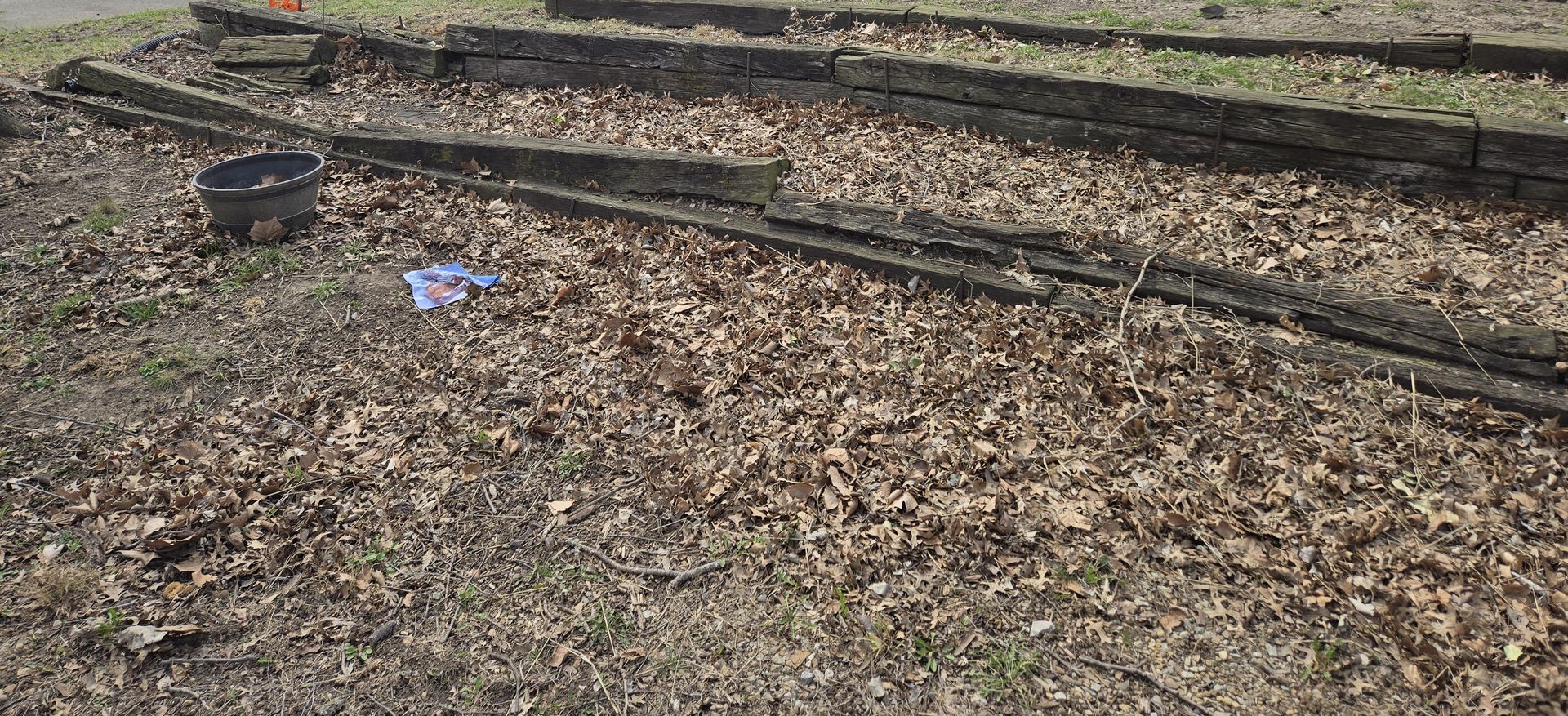
🚩 3. Soil Erosion or Washed-Out Beds
Notice mulch migrating into the lawn?
Rock shifting?
Bare soil appearing after rain?
Water always finds the path of least resistance. If it’s carving visible channels through your yard, erosion is underway.
Left uncorrected, erosion can:
- Undermine landscaping
- Expose roots
- Destabilize retaining walls
- Redirect water toward your home
Tiny erosion today becomes structural concerns tomorrow.
🚩 4. Yellowing or Dying Grass in “Wet” Areas
This one surprises people.
Too much water can look exactly like drought stress.
Roots that sit in saturated soil cannot breathe. The turf weakens, yellows, and thins — even though moisture is abundant.
Adding more irrigation in these spots only makes the problem worse.
🚩 5. Water Flowing Toward Your Foundation
This deserves special attention.
Water should always drain away from your home.
If you see runoff moving toward your foundation, pooling near basement walls, or saturating the perimeter of the house, grading correction is not optional — it’s preventative maintenance.
Foundation repairs are exponentially more expensive than correcting slope issues early.
Why Drainage Problems Rarely Fix Themselves
Drainage isn’t guesswork.
It’s physics:
- Elevation
- Soil composition
- Compaction
- Runoff paths
- Subsurface movement
Quick fixes often redirect water instead of solving the root cause.
That’s why some homeowners find themselves “fixing” the same wet spot every spring.
If the grade is wrong, the water will win — every time.
What To Do If You Notice These Signs
Step one is observation.
Step two is correction before the damage escalates.
Solutions can include:
- Regrading low areas
- Installing proper drainage systems
- Correcting downspout discharge
- Reinforcing erosion-prone zones
- Integrating rock beds strategically
The right solution depends entirely on how water is behaving on your property.
The Advantage of Addressing It Early
Drainage corrections in early spring are:
- Easier to diagnose
- Less invasive
- More cost-effective
- Preventative rather than reactive
Ignoring minor issues now often leads to:
- Lawn replacement
- Wall repairs
- Foundation concerns
- Major landscape reconstruction
And that’s where costs climb quickly.
Not Sure If It’s a Real Problem?
Kansas weather can be unpredictable, and not every puddle means disaster.
But patterns matter.
If your yard consistently holds water, shifts material, or feels uneven after rain, it’s worth evaluating properly.
Yardcrafters designs grading and drainage solutions for Topeka properties that are built to function long-term — not just temporarily redirect water.
If you’d like a professional opinion, we’re happy to take a look.
Call (785) 608-2970
www.yardcraftersks.com
Straight answers. Practical solutions.